
I’ve owned more hoodies than I can count, and it wasn’t until I started sewing my own that I realized how much goes into one.
From the eyelets on the hood to the ribbed hem at the bottom, every part has a purpose.
In this article, I’ll walk you through all the parts of a hoodie, with diagrams, labels, and clear breakdowns. You’ll know exactly what each piece is called and what it does.
I’ve spent years studying garment construction, so you’re in good hands.
Let’s get started.
What Makes Up a Hoodie
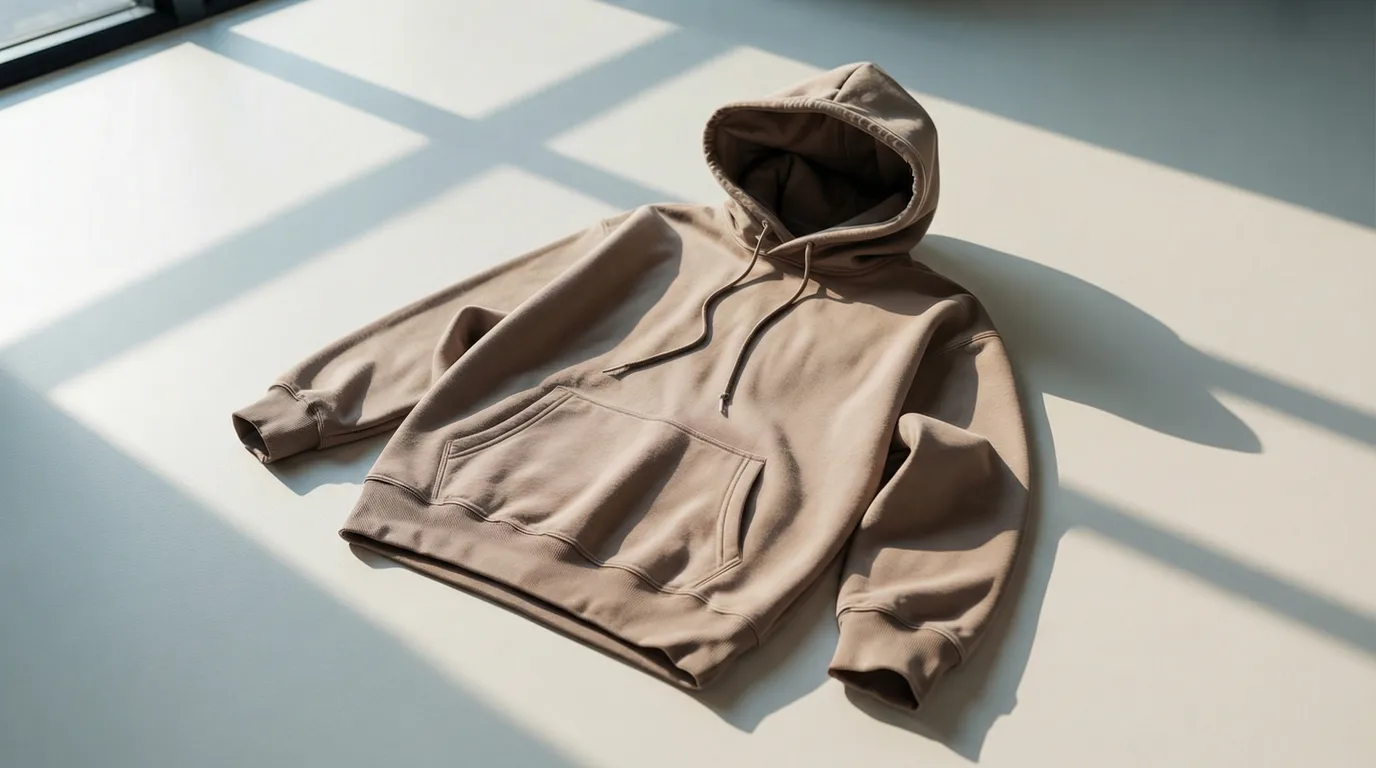
Most people wear hoodies every day without thinking about what holds them together.
A hoodie is made up of several visible parts and internal construction details, including the hood, body panels, sleeves, cuffs, hem, pockets, and sometimes a zipper.
Each part is cut, sewn, and attached in a specific way. Knowing these parts helps you shop smarter, care for your hoodie better, and spot quality construction at a glance.
Labeled Diagram of the Parts of a Hoodie
Here’s a quick visual guide to help you identify every part before we break things down.
Front View Diagram
The front view highlights the most recognizable hoodie parts, including the hood, drawstring, sleeves, pocket, cuffs, and hem.
Helping you quickly identify each visible component at a glance.This makes understanding hoodie construction simple and intuitive for beginners.
Hood
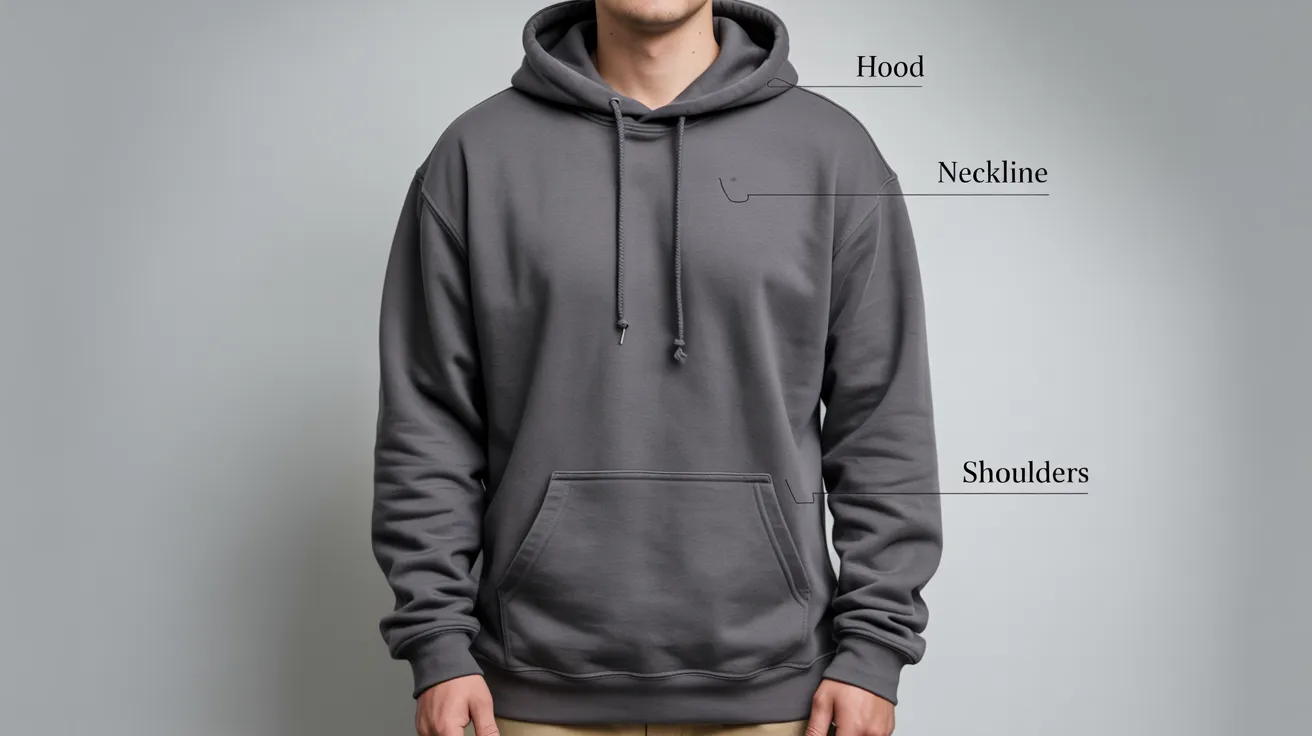
Sits at the top of the neckline and provides coverage from wind and cold.Without a well-shaped hood, the whole hoodie loses its function.
Most hoods are made from the same fabric as the body for a consistent look and weight.
Drawstring

A cord that runs through the hood opening. Pull it to tighten the fit around your face.It’s a small detail that makes a big difference in cold weather.
Most drawstrings are made from flat polyester or cotton cord for durability.
Eyelets
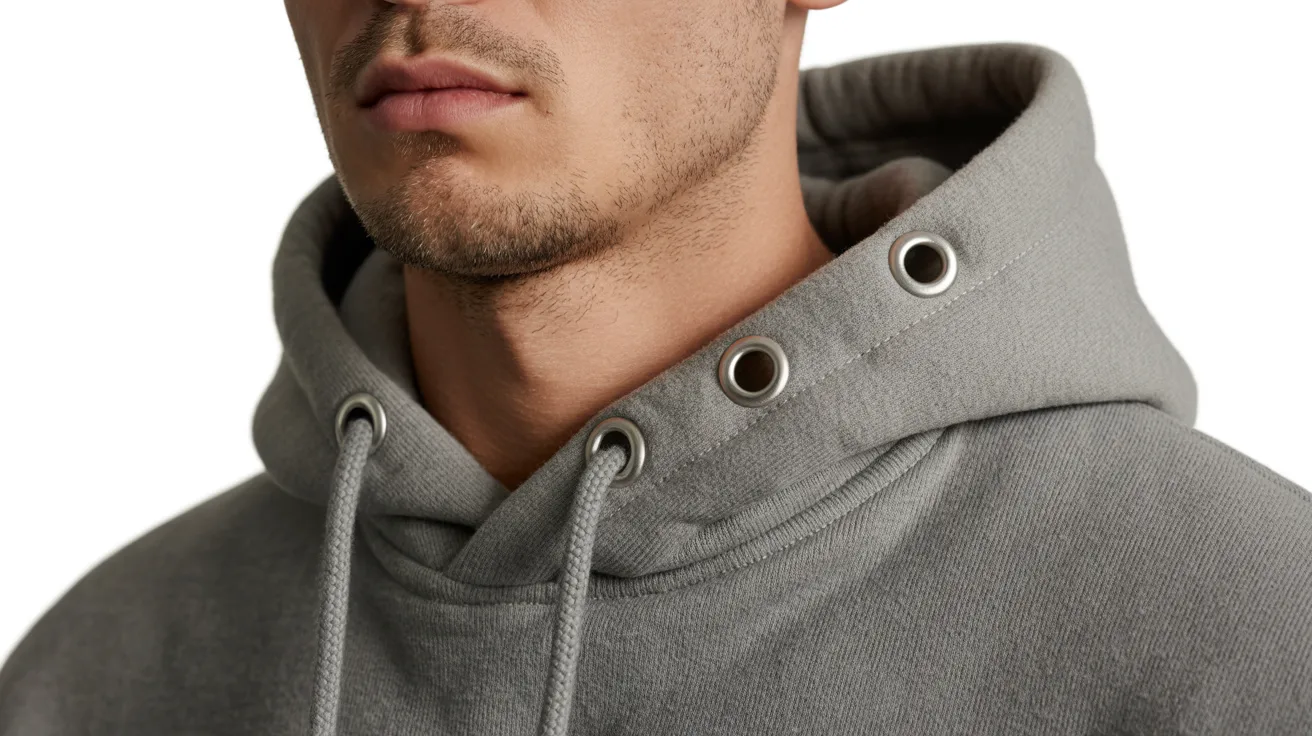
Small reinforced holes on both sides of the hood opening where the drawstring passes through.Without eyelets, the fabric would tear under the pressure of repeated pulling.
Metal eyelets tend to last longer than plastic ones on high-use hoodies.
Sleeves

Fabric tubes attached at the shoulders that cover your arms down to the wrist cuffs.The way sleeves are cut affects how freely you can move your arms.
Longer sleeves are often preferred in colder climates for extra wrist coverage.
Kangaroo Pocket
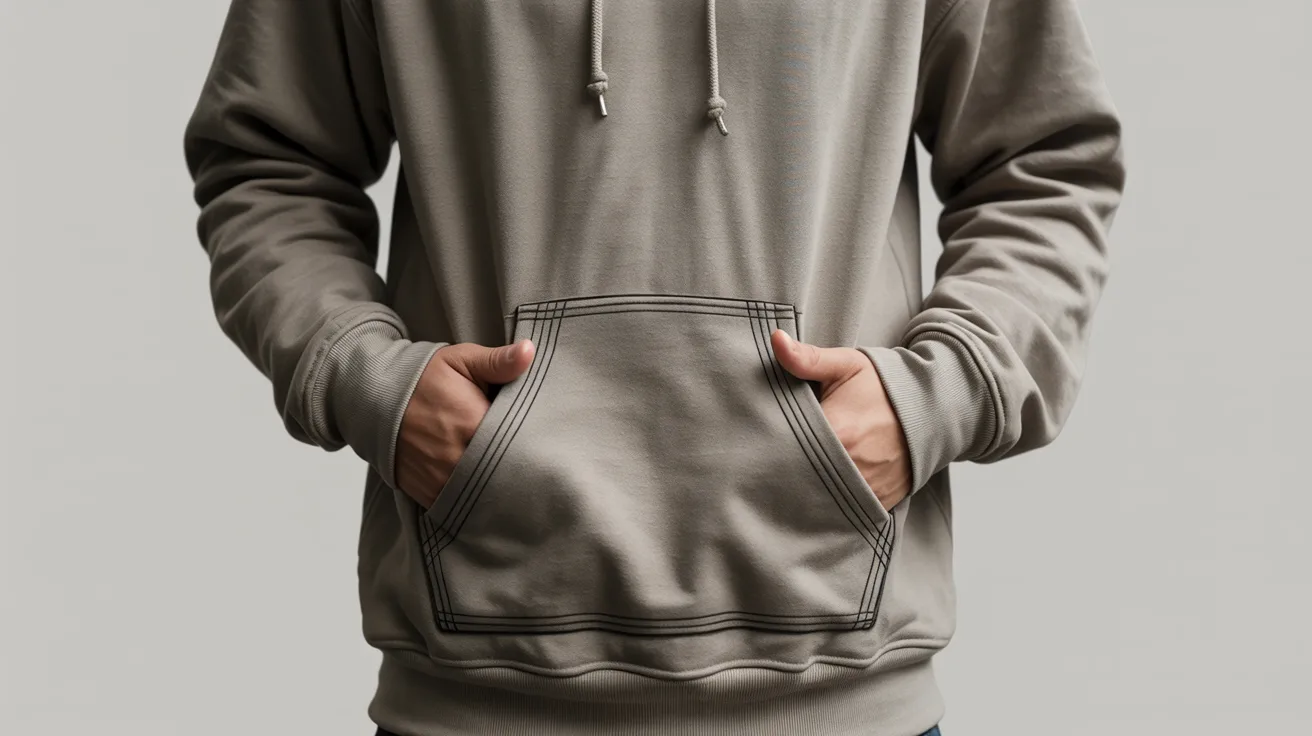
A wide front pocket with two side openings. One continuous piece, sewn across the front.It’s the most practical part of any pullover hoodie.
The pocket lining sits directly against the body, which is what keeps your hands warm.
Ribbed Cuffs
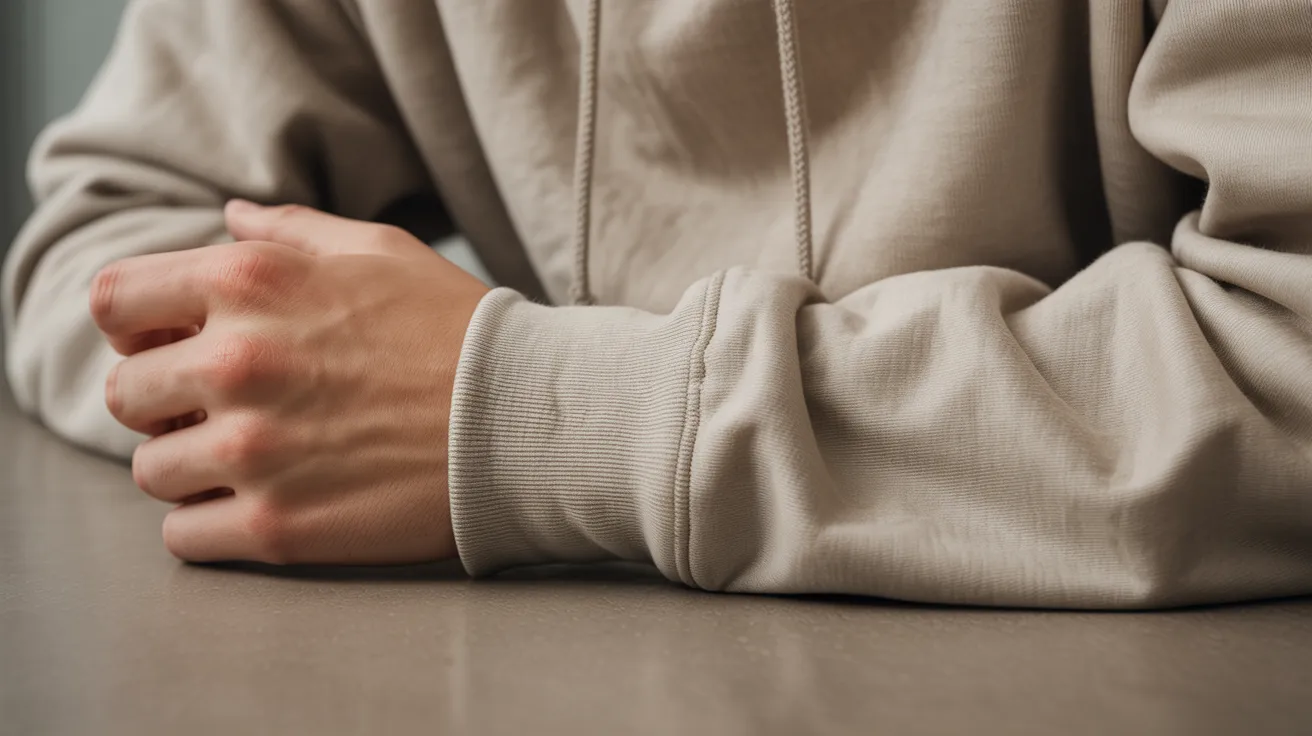
Stretchy, ribbed bands at each sleeve end that hug the wrist and keep cold air out.Good cuffs bounce back after stretching and hold their shape wash after wash.
Cuffs made with a higher spandex content tend to keep their elasticity much longer.
Ribbed Hem
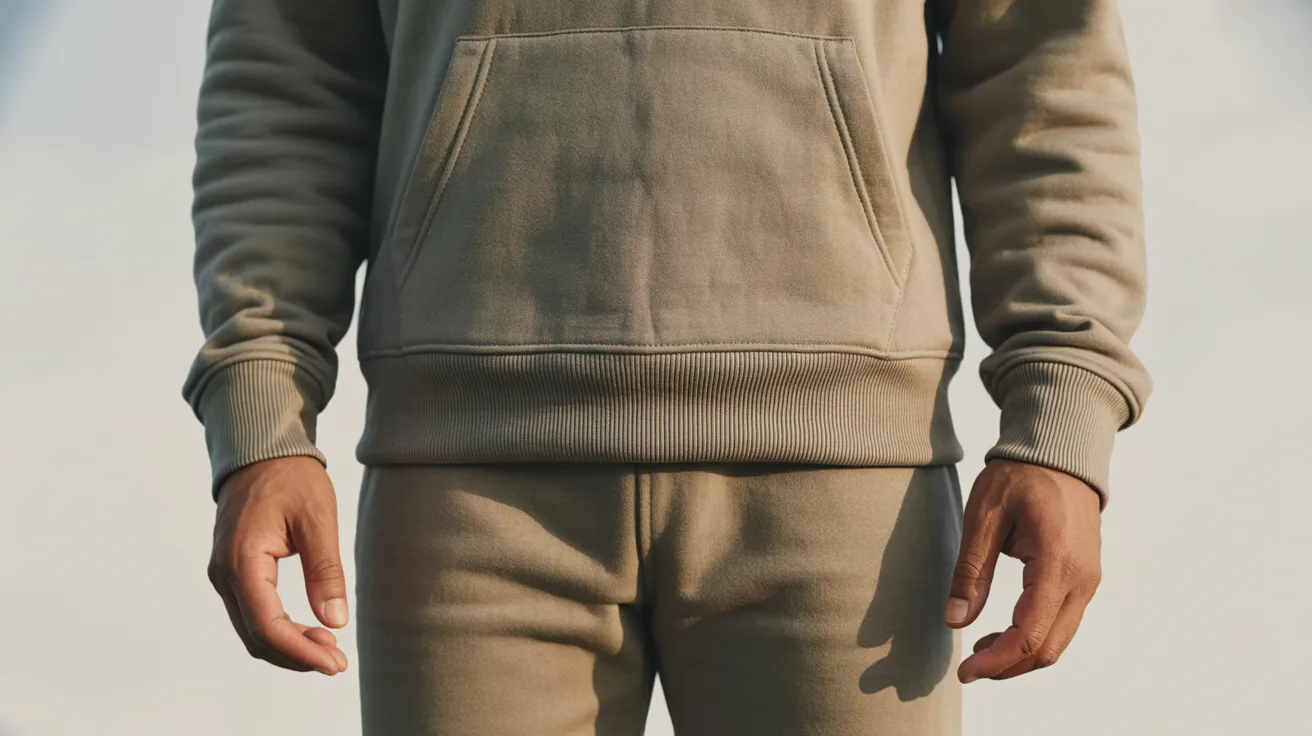
A ribbed band at the bottom of the hoodie that holds everything in place at the waist.A worn-out hem is usually the first sign that a hoodie is losing its shape.
The hem works together with the cuffs to seal in warmth from top to bottom.
Back View Diagram

The back of a hoodie may look simple, but it plays a major role in structure and fit. The back panel is usually one large piece of fabric that forms the entire back of the garment.
A well-cut back panel lies flat across the shoulders without pulling or bunching.Across the top, shoulder seams connect the front and back panels.
When properly placed, they sit flat and stay aligned with your natural shoulder line, preventing the hoodie from shifting during movement.
Running down the center of the hood is a seam that gives it depth and shape. This center seam helps the hood sit naturally when worn and prevents it from looking flat or shapeless.
Inside View Diagram
Flip your hoodie inside out and you’ll see the construction details that affect comfort and durability.
Neck Tape
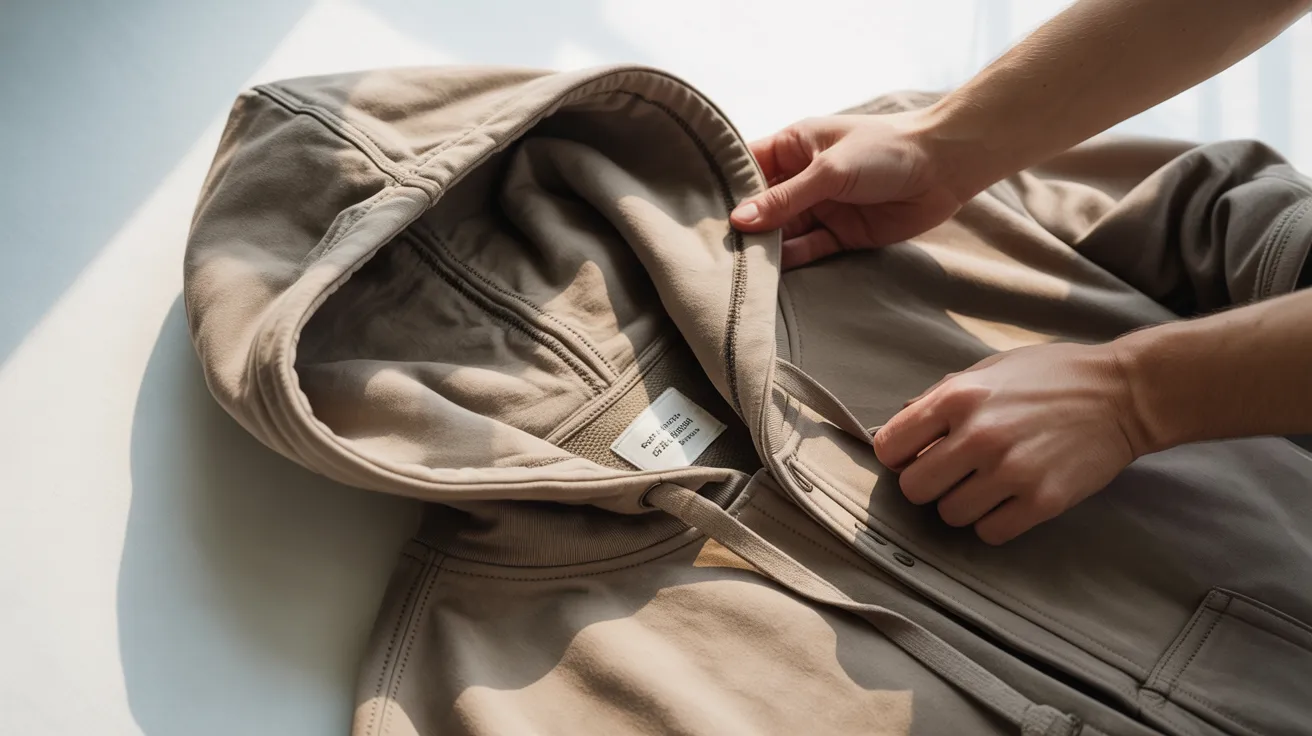
A reinforcing strip sewn inside the neckline to prevent stretching over time.It’s one of the clearest signs of quality construction in any hoodie.
Neck tape also reduces irritation against the skin for people with sensitive necks.
Care Label
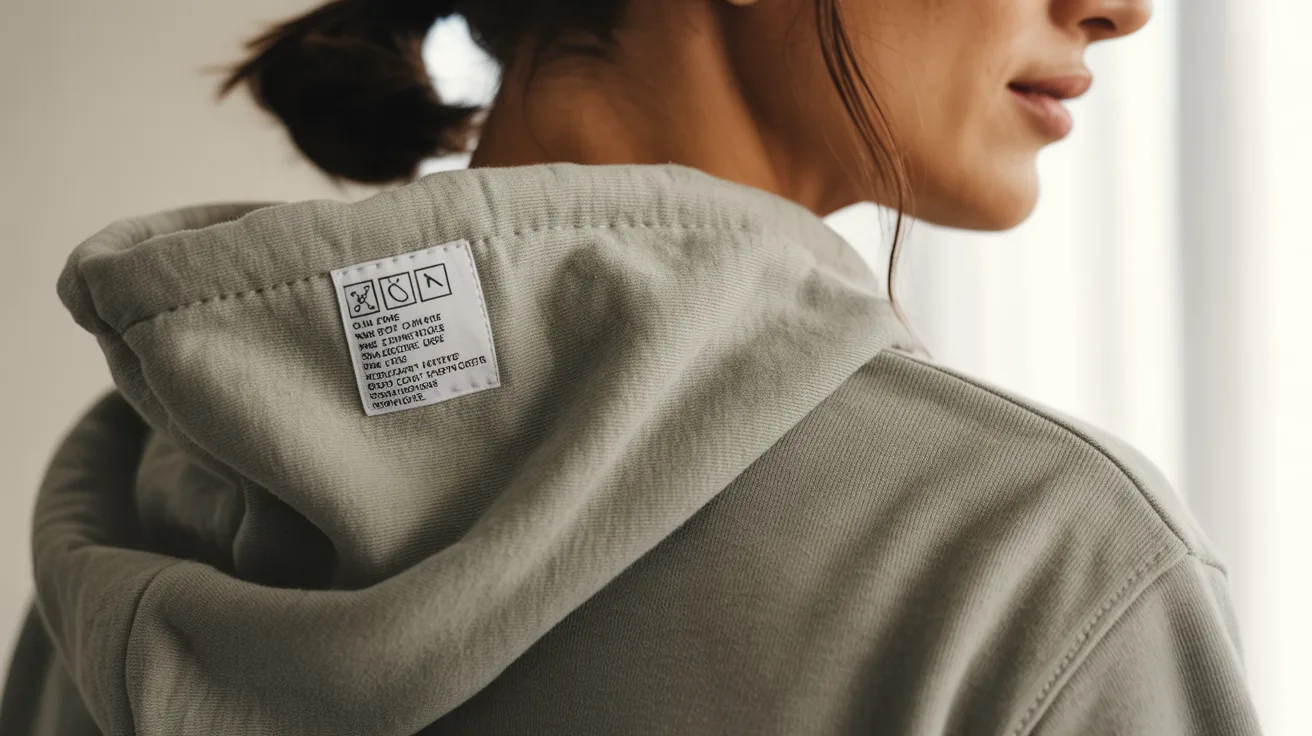
A tag at the back neck or side seam listing fabric content and washing instructions.Always check this before washing, it can save your hoodie from shrinking or pilling.
Some brands now print care instructions directly onto the fabric to avoid scratchy tags.
Interior Seams
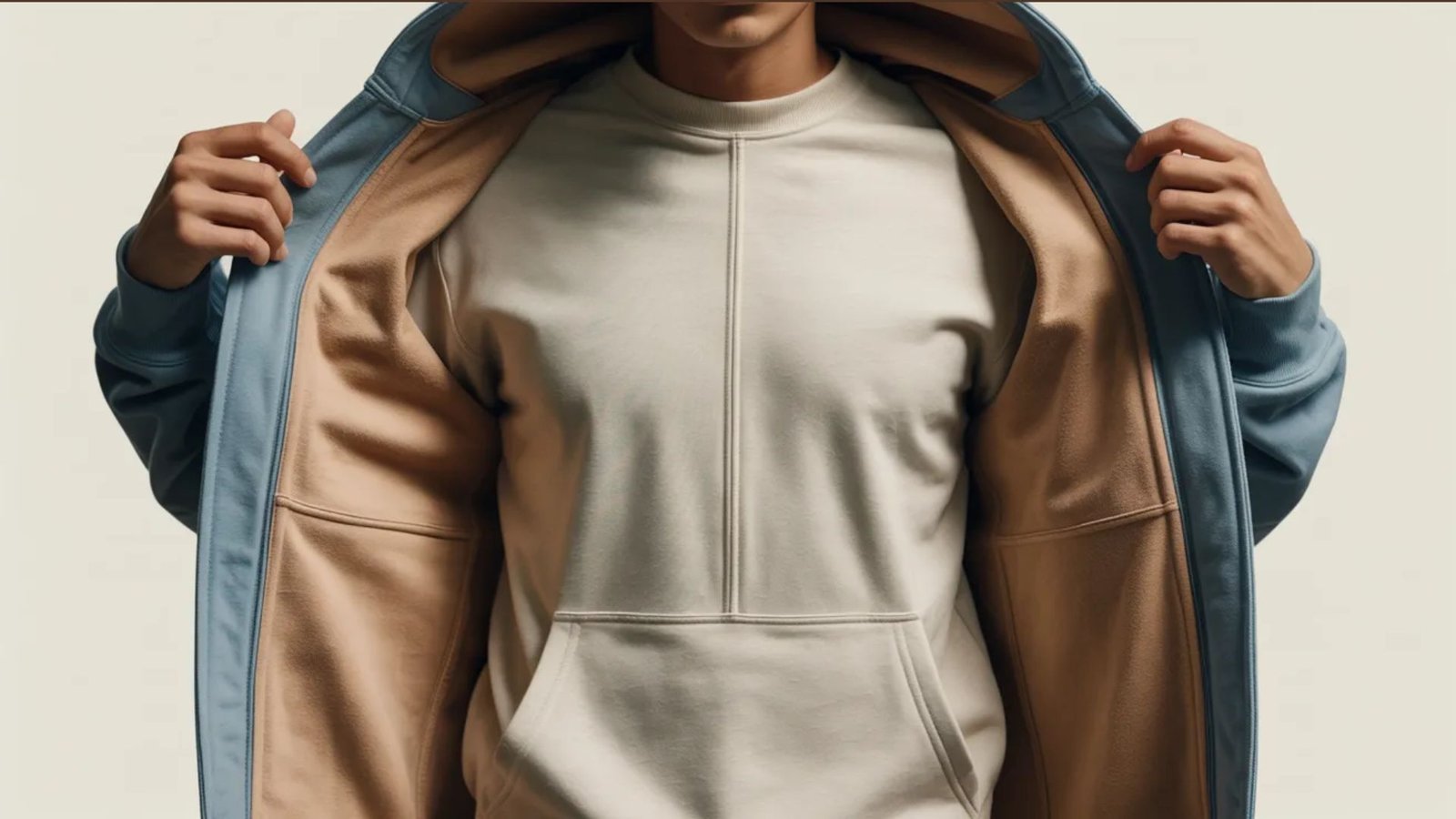
Seams that connect all panels. Better hoodies have these finished or covered for a cleaner feel.Rough, unfinished seams are a common sign of lower quality construction.
Covered or bound seams also reduce skin irritation during long periods of wear.
Main Body Structure of a Hoodie
The body is the foundation and everything else attaches to it.
Front and Back Panels
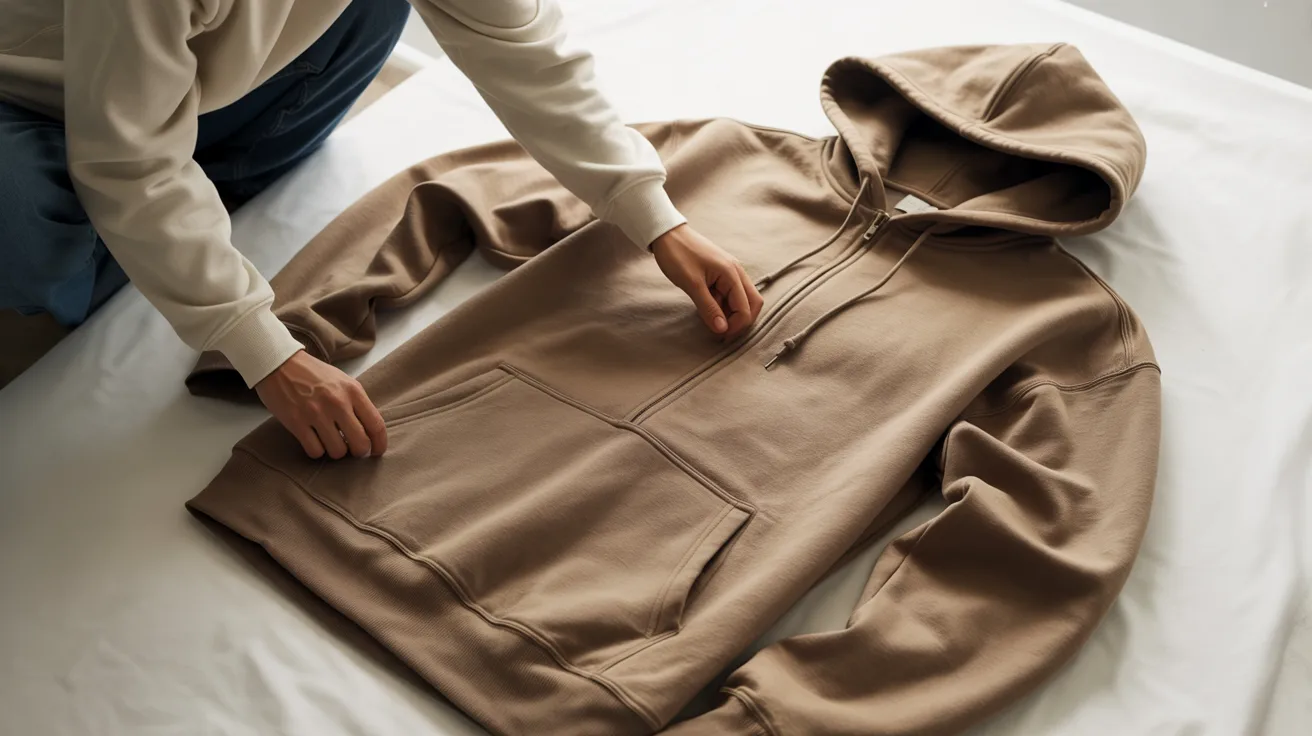
These two pieces form the shape of the hoodie. The front often has a pocket or zipper opening. The back is usually one clean panel.
Both are sewn together at the sides and shoulders to create the full body of the garment.
Side Seams
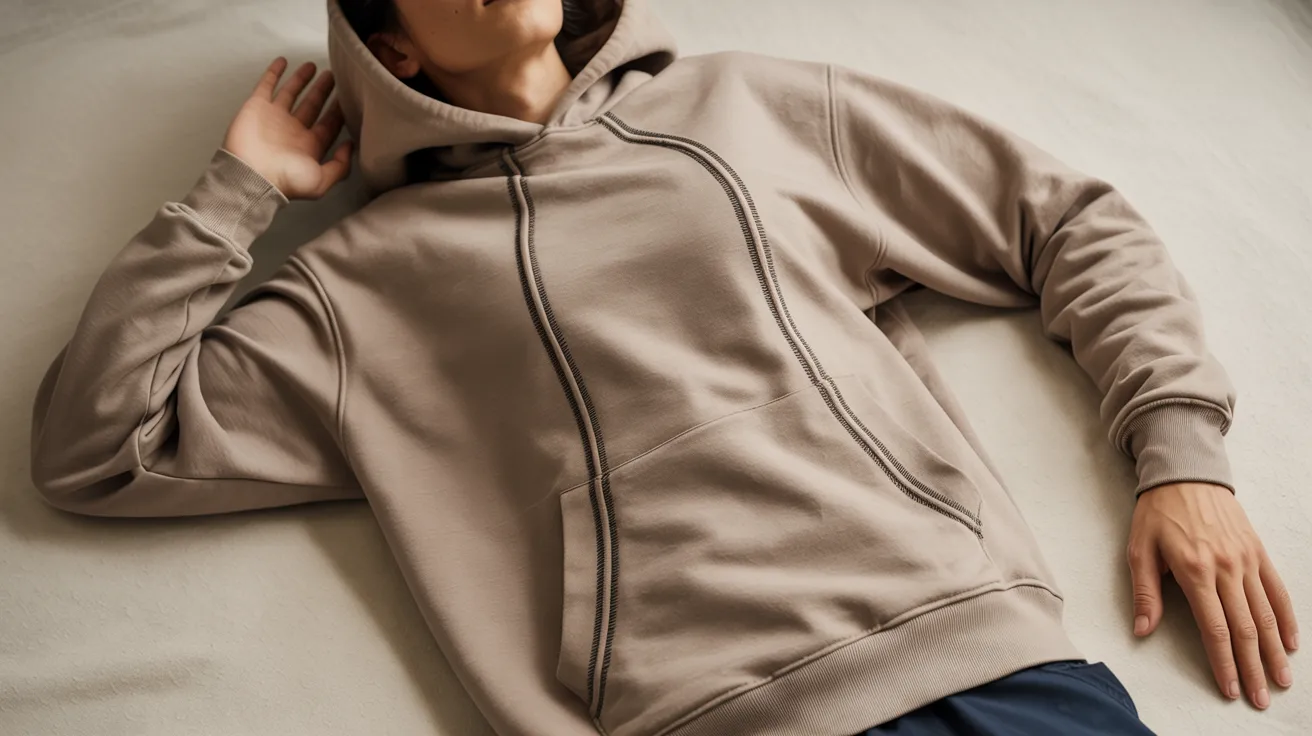
Side seams run from the underarm down to the hem, joining the front and back panels. Curved seams create a more fitted shape.
Straight seams give a boxy fit. This seam line affects how the hoodie drapes and moves when worn.
Hood Construction and Components
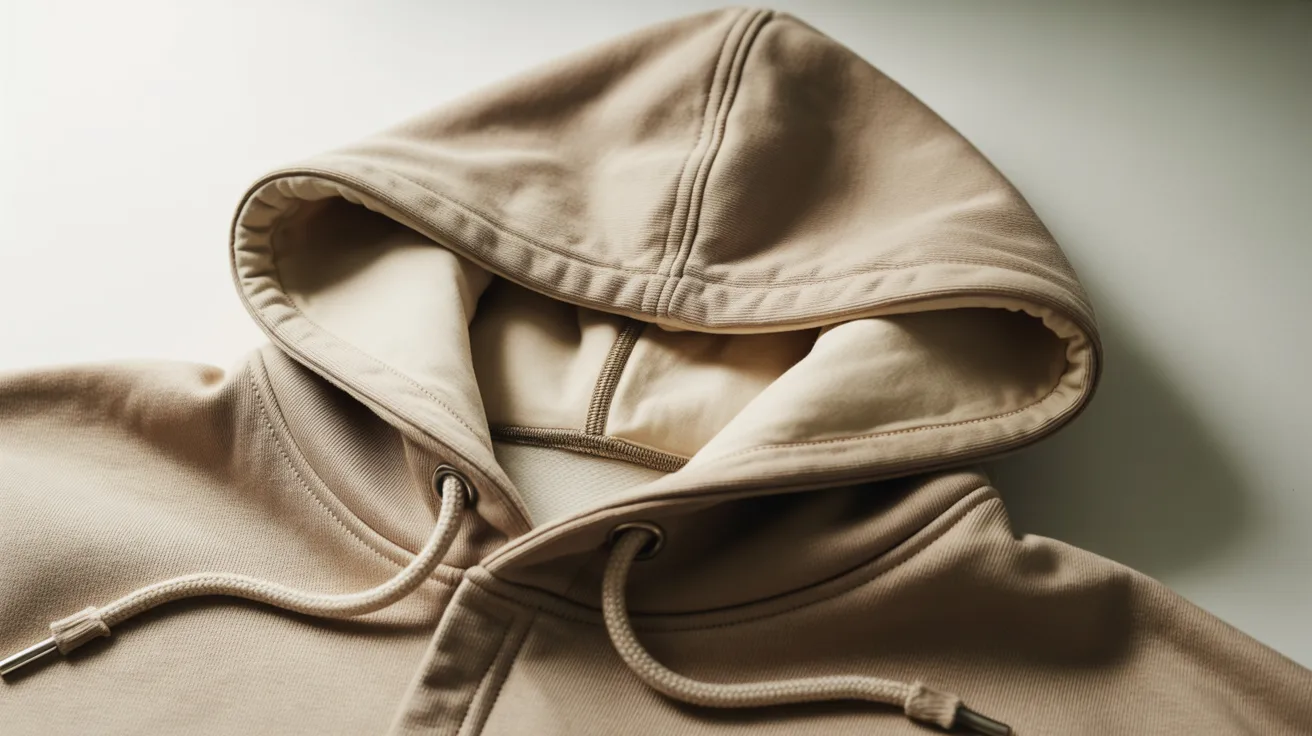
Hoods are built from either two fabric pieces sewn at the center back or three pieces with an added front section for better face framing.
Some styles include a soft or fleece inner lining for warmth and shape. The drawstring runs through a fabric casing and exits through two eyelets, which protect the fabric from tearing.
Small tips called aglets finish each cord end to prevent fraying and make re-threading easier.
Sleeves Construction and Components

The way sleeves are cut and attached changes how a hoodie fits and moves. Set-in sleeves attach to a curved armhole for a structured, tailored look.
Raglan sleeves run in one diagonal seam from collar to underarm, allowing more arm movement and a relaxed fit.
At the end of each sleeve, ribbed cuffs made from stretchy knit seal the wrist to block drafts. Most are double-layered for durability and a clean finished edge.
Pocket Construction and Components
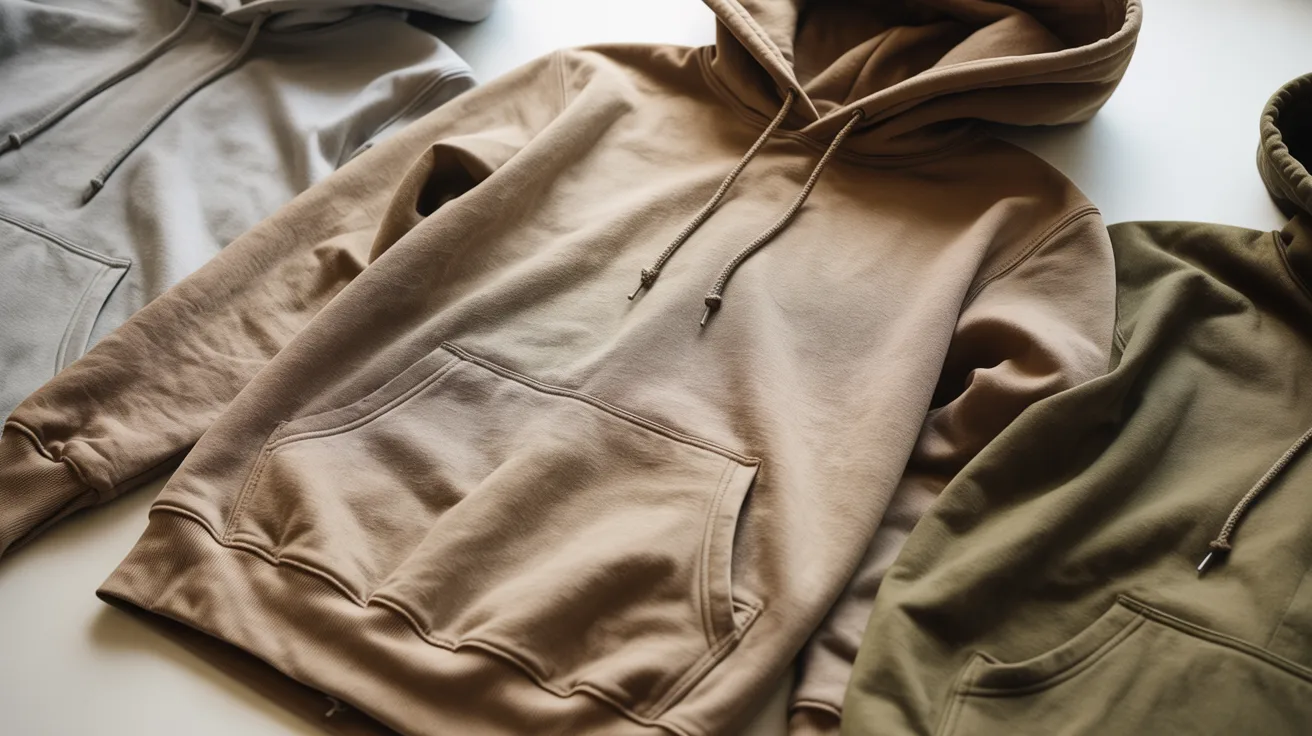
Pockets on a hoodie aren’t just practical. The way they’re made affects the whole front look.
A kangaroo pocket is one wide piece of fabric sewn to the front panel along the top and bottom edges, with both sides left open for your hands.
The inside sits against the body, keeping hands warm and items easy to reach.
Some hoodies skip this and use side pockets sewn into the seams instead, making them mostly hidden when worn.
Zippered versions add security, which is common on athletic and outdoor styles.
Zipper Components

Zip-up hoodies have a full-length zipper sewn down the front.
Zipper teeth: are the interlocking pieces holding both sides together.
The slider: is the pull tab you move up and down.
Zipper tape: is the fabric strip the teeth are attached to, sewn along the front edges.
Top and bottom stops: are small clamps at each end that keep the slider from coming off the track.
Conclusion
Once you start noticing the parts of a hoodie, you can’t stop. I still catch myself checking inside seams before buying.
It’s a small habit that changed how I shop and how long my hoodies last.
Now it’s your turn. Did any part surprise you? Drop a comment below and let me know.
If this helped, share it with a fellow hoodie lover. And if you want to keep learning about clothing construction, check out our related posts.
Frequently Asked Questions
What are the main parts of a hoodie called?
Hood, drawstring, eyelets, kangaroo pocket, ribbed cuffs, ribbed hem, and body panels.
What is the string on a hoodie called?
It’s called a drawstring, used to tighten or loosen the hood opening.
What is the band at the bottom of a hoodie called?
It’s called the ribbed hem, a stretchy band that sits at the waist.
What is the difference between a kangaroo pocket and side pockets?
A kangaroo pocket spans the front, while side pockets are hidden inside the seams.
What are the small tips at the end of hoodie strings called?
They’re called aglets, small caps that stop the drawstring from fraying.