
The moment my hair started turning gray, my wardrobe stopped making sense. Colors I’d worn for years suddenly looked wrong. Not dramatically. Just quietly, consistently off.
It took me a while to understand why. Gray hair changes your contrast, shifts how light hits your skin, and makes your undertone more visible than ever before.
Building the right clothing color palette for gray hair isn’t complicated once you know what to look for.
And if you’re specifically searching for a silver clothing color palette for gray hair during your transition, this guide covers that too.
Why Your Clothing Color Palette Changes When Your Hair Turns Gray

When hair loses its pigment, it also loses its role as a contrast anchor. Dark hair used to create a natural frame around the face.
Gray hair changes that frame, which means colors that once worked can now make skin look washed out or shadowed.
Gray hair is not one single shade. Icy silver, warm gray, steel gray, and salt-and-pepper all interact with skin differently. Treating them all the same is where most people go wrong.
Skin undertone also becomes more visible as hair lightens. Cool undertones, warm undertones, and neutral undertones each respond to different color palettes.
Once your hair is no longer pulling focus, your undertone does.
Certain colors create shadows under the chin and around the eyes when they clash with your specific gray tone.
The right clothing color palette for gray hair removes those shadows and instead reflects light upward, making features look sharper and skin look fresher.
How to Perform a Color Analysis for Gray Hair (Step-by-Step)
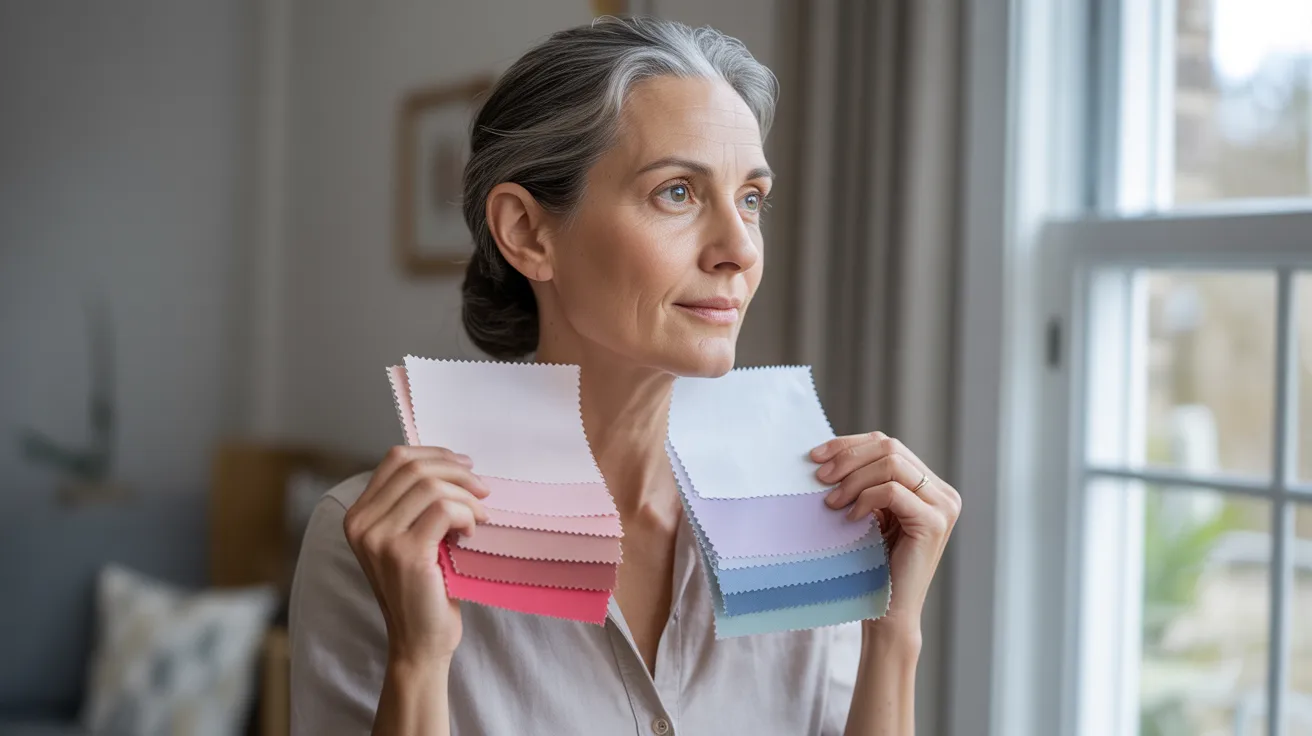
Doing your own color analysis at home is simpler than it sounds.
You don’t need a professional or a full seasonal color system to get useful results. You just need good lighting, a mirror, and a few test colors.
Here’s how to do it properly:
- Start in natural daylight. Artificial lighting skews colors significantly. Stand near a window or go outside for the most accurate reading
- Remove makeup first. Foundation and blush change how colors interact with your skin. A bare face gives you the most honest results
- Pull your hair back or cover it temporarily. This isolates your skin tone so you can test colors without your gray hair influencing the reading
- Hold solid-colored fabrics directly under your chin. Bring each color close to your face and observe what happens to your skin in the mirror
- Look for these reactions. Colors that work will make your skin look brighter, reduce redness or sallowness, and make your eyes appear more defined. Colors that don’t work will cast shadows, emphasize lines, or make skin look flat
- Identify your undertone. Hold a warm golden yellow and a cool lavender under your chin. Whichever makes your skin look healthier reveals whether you lean warm, cool, or neutral
- Test contrast levels. High-contrast gray hair like icy silver or dark steel gray can usually handle bolder colors. Softer grays often suit muted or mid-tone palettes better
- Build a small swatch collection. Once you identify what works, gather fabric swatches or paint chips in those shades to use as a shopping reference
Once you’ve done this test, you’ll have a clear, personal read on your best colors rather than relying on general advice that may not apply to your specific gray shade or skin tone.
The Best Clothing Color Palettes for Different Types of Gray Hair
Not all gray hair behaves the same way. Your specific shade of gray affects which colors will work hardest for you. Here’s a breakdown by gray type so you can find exactly where you fall.
1. Icy Silver Gray Hair
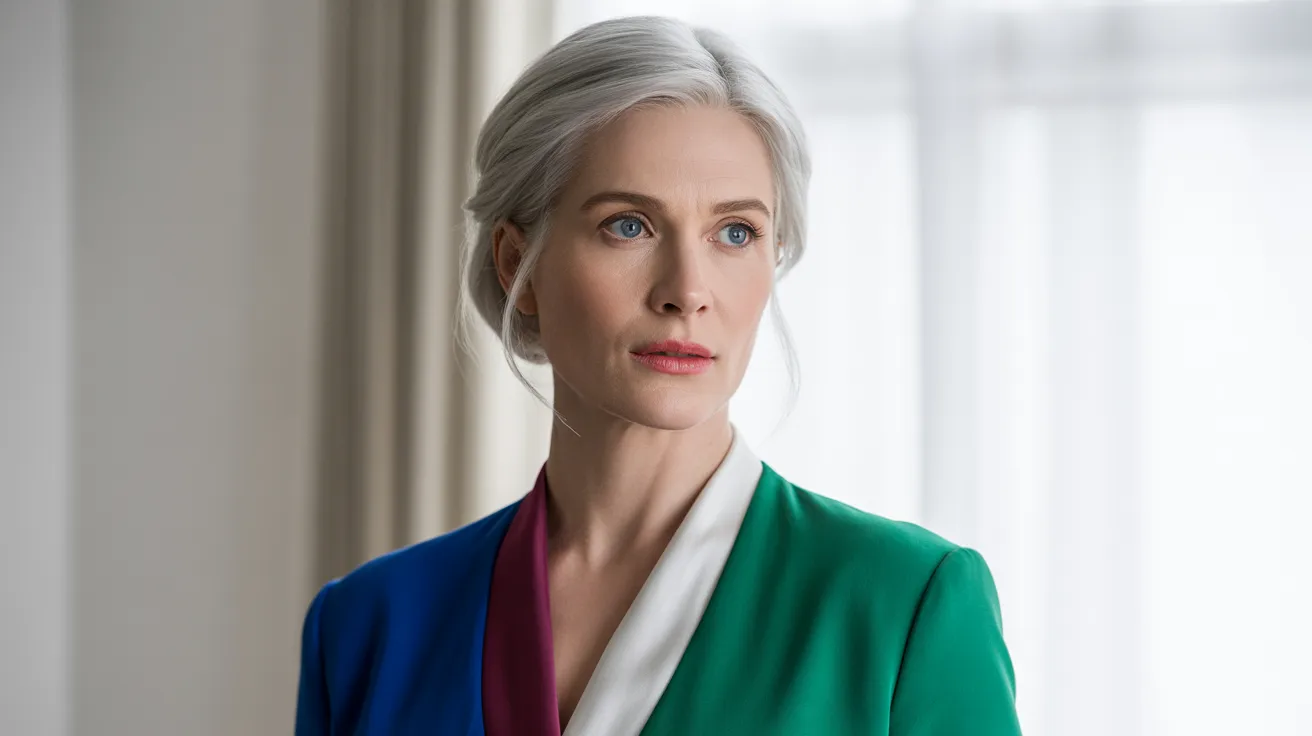
Icy silver gray has a cool, high-shine quality that creates strong contrast on its own. Colors that match that intensity work best here.
Cobalt blue, emerald green, berry tones, and crisp white all perform well against icy silver. They hold up to the brightness of the hair rather than competing with it awkwardly.
Muddy browns, khaki, and overly warm tones tend to clash. They pull the look toward dullness rather than sharpness. A clean, high-contrast wardrobe suits this hair type best.
2. Salt-and-Pepper Gray Hair
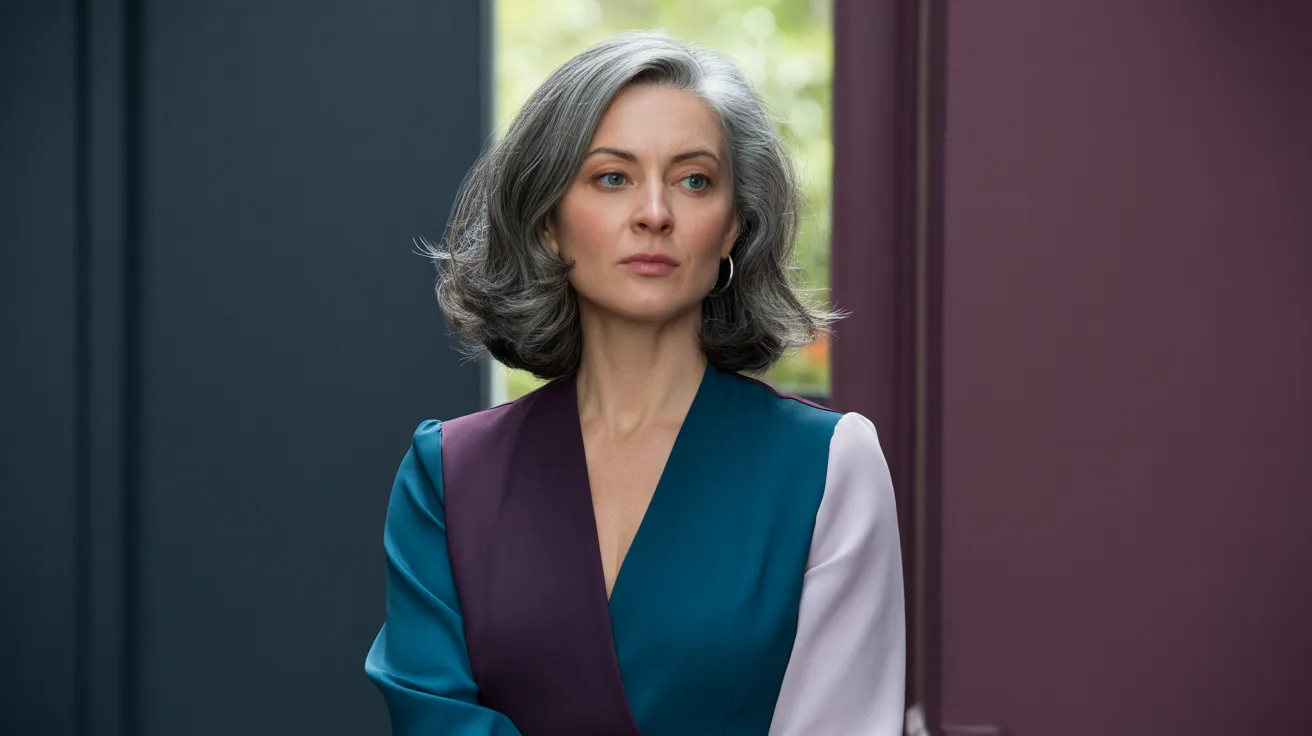
Salt-and-pepper hair has natural tonal variation built in, which gives it flexibility. It sits between high-contrast and soft, so it works with a balanced range of colors.
Deep teal, plum, and soft navy all complement this hair type well. These colors have enough saturation to hold their own without overwhelming the natural mix of light and dark tones in the hair.
Avoid colors at either extreme. Very pale pastels can look washed out, and very dark intense shades can flatten the hair’s natural dimension.
3. Steel Gray Hair

Steel gray has a deep, blue-toned quality that pairs well with strong, grounded colors. It has more depth than icy silver, so it can handle richer shades.
Charcoal, burgundy, forest green, and deep navy all work well here. They complement the cool depth of steel gray without fighting against it.
Strong neutrals are a particularly good foundation for this hair type. They let the hair read as a statement on its own while keeping the overall look cohesive.
4. Warm Gray Hair

Warm gray has subtle golden or beige undertones that make it behave differently from cool-toned grays. Cool, icy colors can work against it rather than with it.
Olive, camel, warm beige, terracotta, and soft rust all complement warm gray hair wonderfully. These shades echo the warmth in the hair and create a harmonious overall look.
Avoid overly cool icy pastels and stark white. They can make warm gray hair look yellowed rather than golden, which works against the natural warmth in the tone.
5. Soft Light Gray Hair

Soft light gray is gentle and low-contrast, which means very bold or saturated colors can overpower it. The goal here is balance rather than drama.
Dusty rose, lavender, powder blue, and soft sage all work well. These tones sit at a similar saturation level to the hair, creating a cohesive, pulled-together look.
Avoid anything too vivid or too dark. The contrast gap between a very bold color and soft light gray hair can make the outfit look disconnected from the overall appearance.
6. Dark Silver Gray Hair
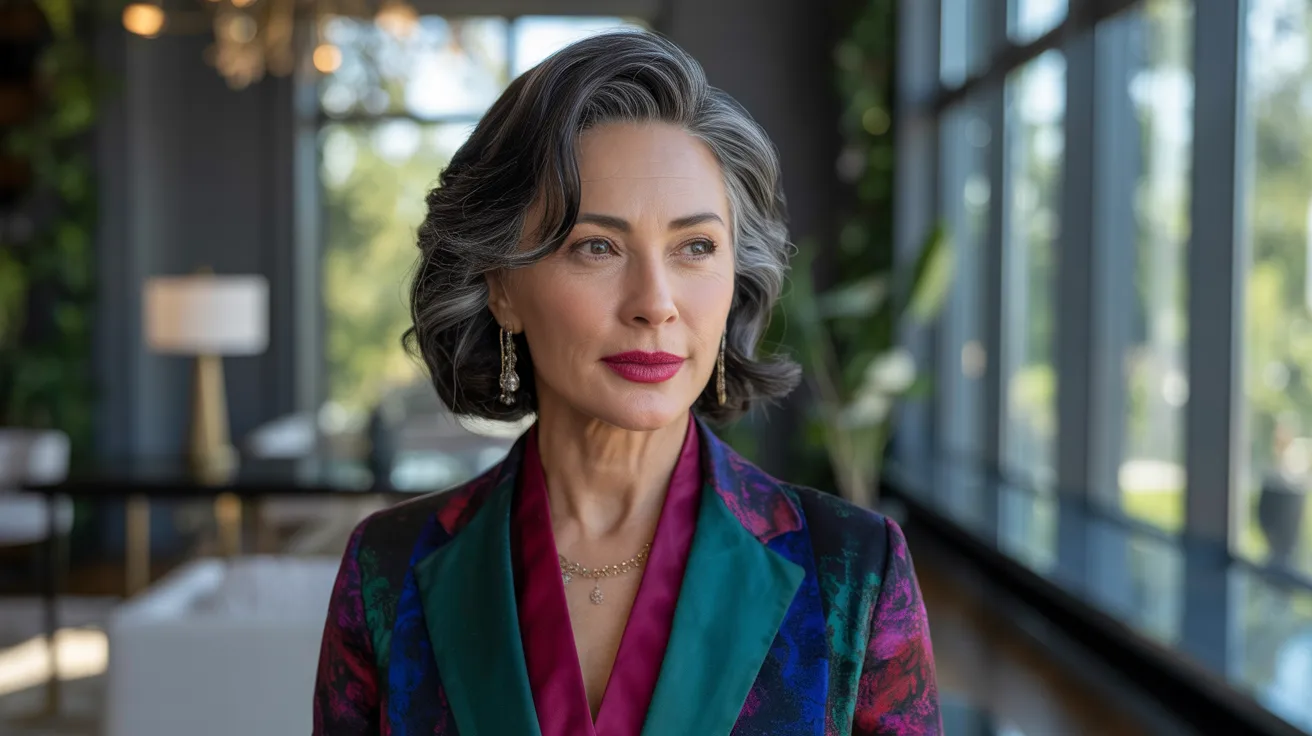
Dark silver gray has depth and intensity that can handle stronger color choices without losing balance. This is one of the most versatile gray shades for building a wardrobe.
Jewel tones like sapphire, amethyst, and emerald all work well. Rich navy and raspberry are also strong choices that complement the density of dark silver hair.
This hair type can handle deeper saturation that might overwhelm softer gray shades. Use that range to your advantage when building your clothing color palette for gray hair.
7. Transitioning to Gray (Growing It Out)
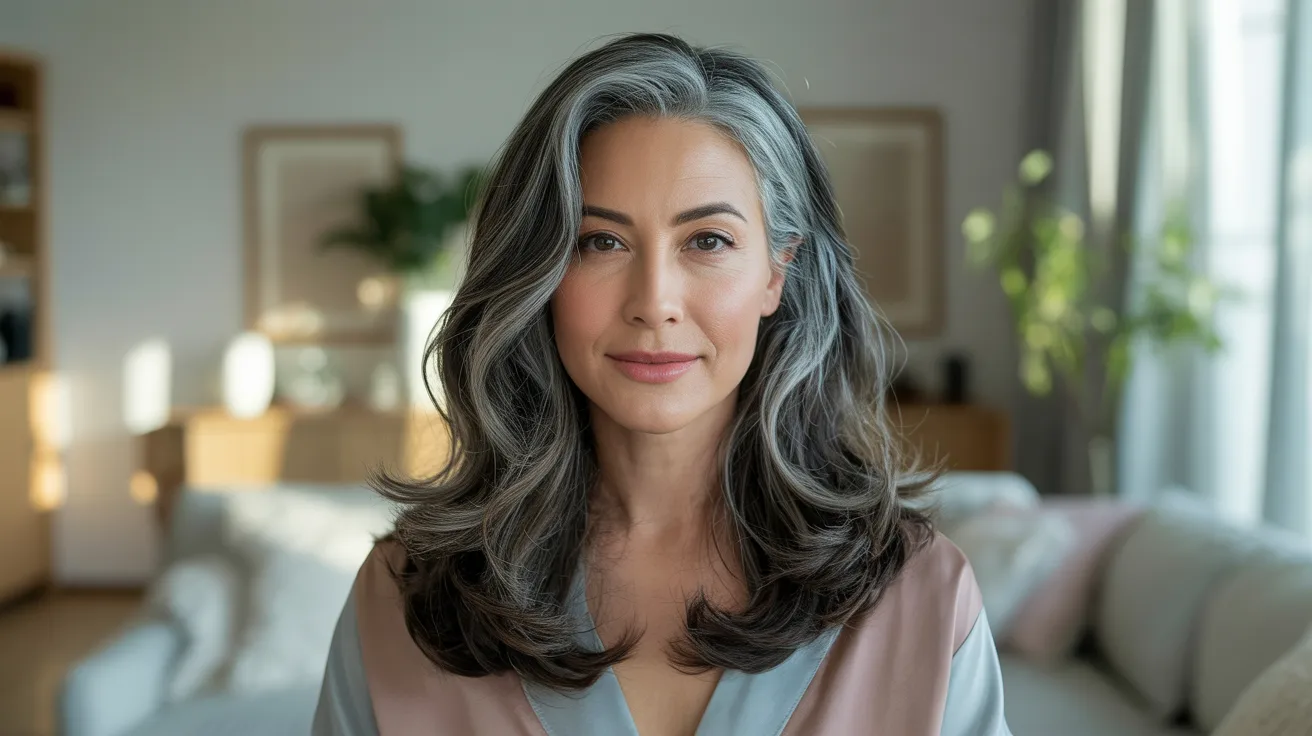
The transition phase is its own styling challenge. You’re working with two distinct tones at once, darker roots and lighter ends, which means your palette needs to bridge both.
Color blocking and mid-tone shades tend to work well during this stage. Colors that sit between your darkest and lightest hair tones help unify the overall look rather than emphasizing the contrast.
Many people find that a refined silver clothing color palette for gray hair works particularly well here. Soft neutrals, dusty tones, and muted mid-range colors complement both the dark and light portions of transitioning hair without clashing with either.
Common Mistakes When Choosing a Clothing Color Palette for Gray Hair
Most color mistakes come from assumptions rather than observation. Knowing what to avoid saves a lot of trial and error when building a wardrobe around gray hair.
Here are the most common mistakes to watch for:
- Assuming all gray hair needs cool tones. Warm gray hair specifically benefits from warm colors. Applying cool-tone rules universally leads to a washed-out result for warm-gray wearers
- Copying someone else’s palette. Two people with gray hair and different undertones will suit entirely different colors. What works on someone else may not work on you
- Ignoring contrast. High-contrast gray hair needs colors with enough weight to match it. Soft pastels on icy silver hair can disappear visually
- Overusing black. Black can work beautifully for high-contrast gray hair, but for softer or warmer gray tones it can cast shadows and look heavy near the face
- Not updating makeup alongside the wardrobe. A new color palette often means existing makeup shades no longer work as well. Lip color and blush in particular need revisiting when your hair color changes significantly
- Choosing trendy shades over flattering ones. A color being popular this season doesn’t mean it suits your specific gray tone and undertone. Always prioritize what works on your face over what’s currently everywhere
Getting these basics right before you shop makes the process much faster and the results much more consistent.
Conclusion
Gray hair is not a limitation. It’s actually one of the most striking things you can have. The right colors make that obvious to everyone in the room.
You now have everything you need to build a clothing color palette for gray hair that actually works for you specifically, not just in theory.
Pick one color from your analysis. Wear it this week. Notice the difference.
Then come back and tell me what you found. Drop your gray hair type and best color in the comments below. I’d love to hear it.
Frequently Asked Questions
What colors look best with gray hair?
The best colors depend on your specific gray shade and skin undertone. Cool grays suit cobalt, emerald, and berry tones, while warm grays look better with olive, camel, and terracotta shades.
Can people with gray hair wear black?
Yes, but it depends on contrast level and undertone. High-contrast gray hair like icy silver or dark steel gray handles black well, while softer or warmer gray tones can find black too heavy near the face.
Is silver or gold jewelry better with gray hair?
Silver jewelry tends to complement cool-toned gray hair most naturally. Gold works better with warm gray hair, where it echoes the golden undertones in the hair rather than clashing with them.
How do I know if a color is washing me out?
Hold the fabric under your chin in natural light and check whether your skin looks brighter or flatter. A washing-out effect usually shows as added shadow under the eyes or a dull, gray cast across the skin.
Does gray hair mean I should only wear cool colors?
No. Cool colors suit cool-toned gray hair, but warm gray hair specifically benefits from warm shades like olive, beige, and terracotta. Your undertone and gray warmth always matter more than a general rule.