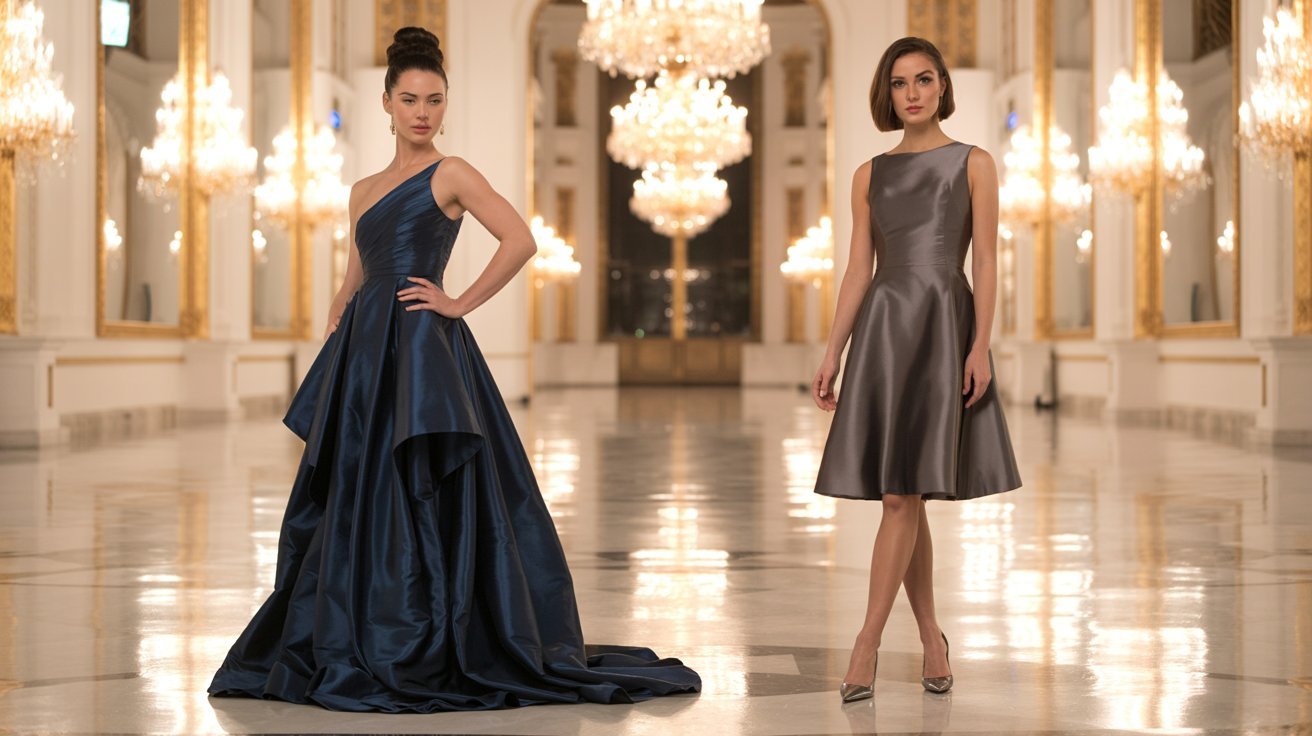
Most people use “evening gown” and “evening dress” like they mean the same thing. But they don’t, not always.
If you’ve ever stood in a store wondering whether that floor-length gown counts as an evening dress or something else entirely, you’re not alone. It’s a common mix-up.
This article breaks down the real meaning behind both terms. You’ll learn the key features, the differences, and when each one actually applies.
From formal evening gowns to cocktail-length styles, let’s clear it all up.
What Is an Evening Gown?
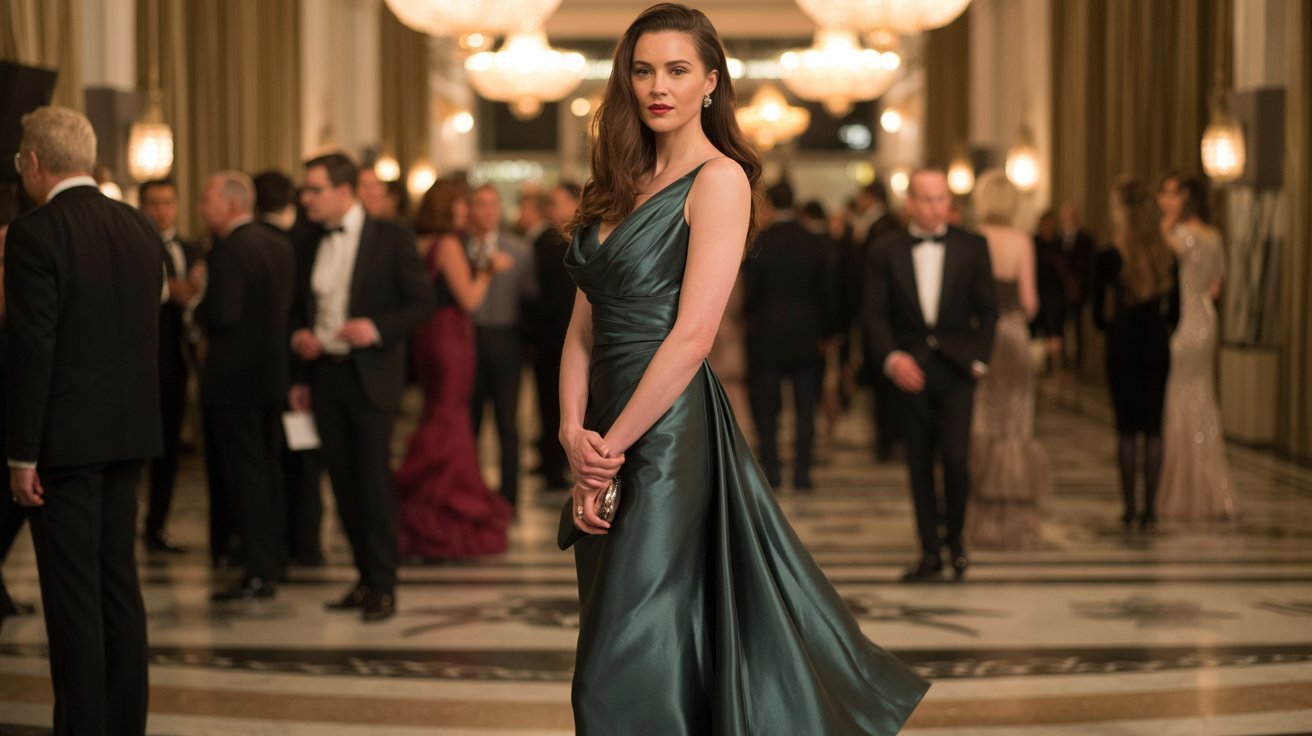
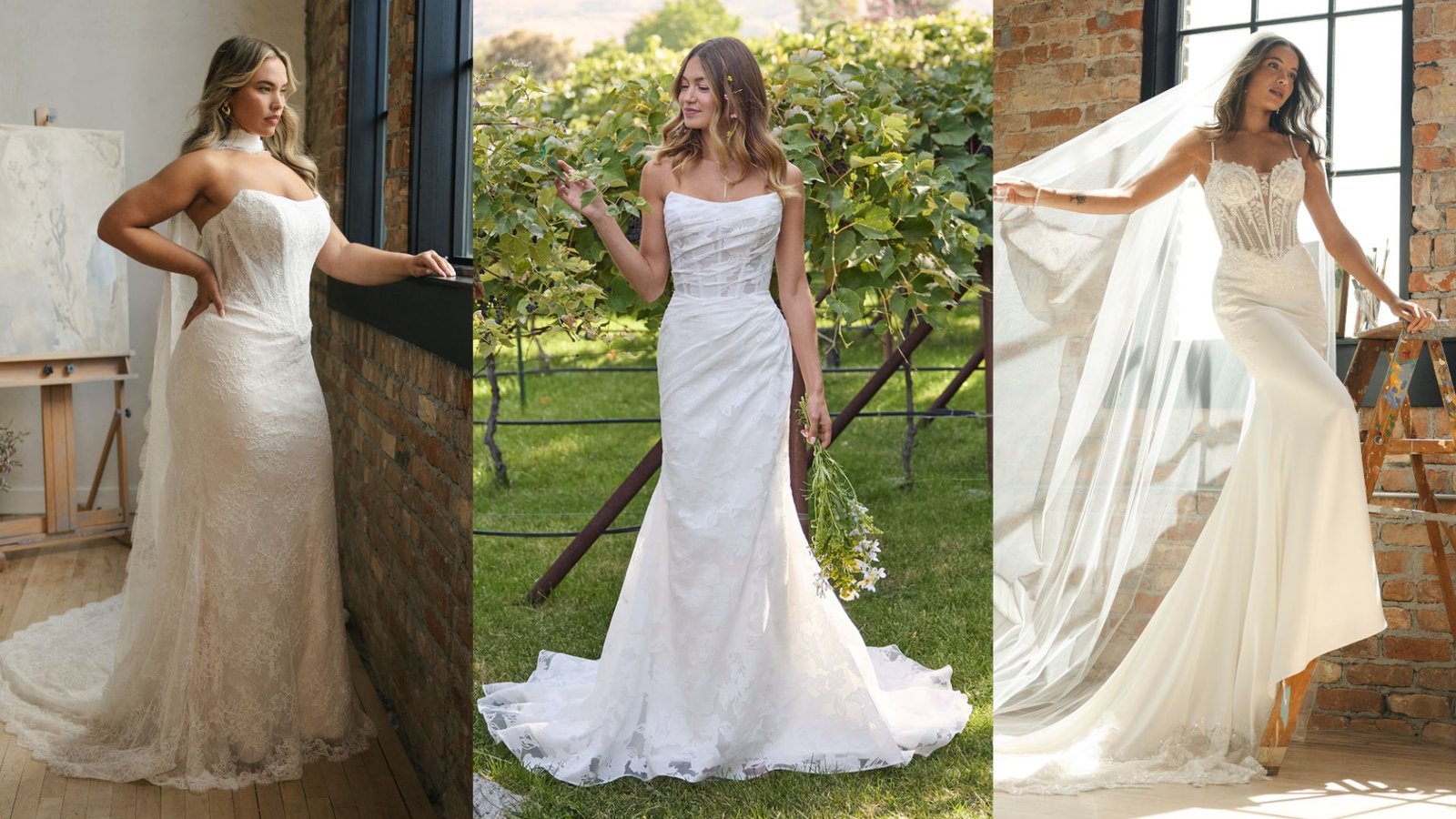
An evening gown is a formal, floor-length dress made for evening events. It is built for black-tie occasions and high-formality settings where dressing up is expected.
Think galas, award ceremonies, and grand receptions.
Key Characteristics of an Evening Gown
- Floor-length hem that falls anywhere from the ankle to the floor
- Luxurious fabrics like satin, silk, chiffon, velvet, and tulle
- Structured bodice or corsetry for a polished, fitted look
- Classic silhouettes including A-line, mermaid, ball gown, and sheath
- Embellishments such as beading, sequins, embroidery, and trains
What Is an Evening Dress?
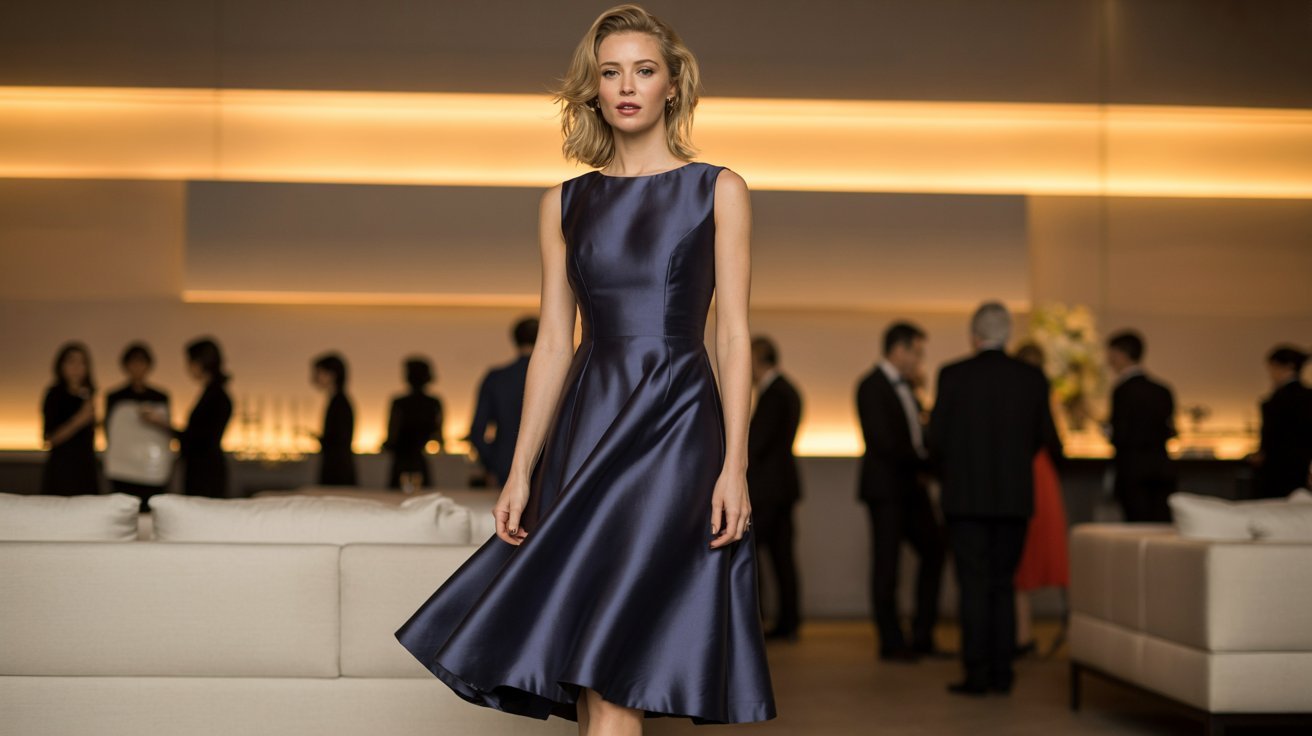
An evening dress is a broader category. It covers any dress made for evening wear, from semi-formal gatherings to fully formal events.
Not every evening dress is a gown, but every gown can be called an evening dress.
Length and Style Variations
Evening dresses come in a range of lengths to suit different occasions:
- Mini
- Knee-length
- Midi-length
- Full-length (including gowns)
Fabric and Design Flexibility
Evening dresses offer more freedom in fabric and finish. Common choices include crepe, lace, jersey, and satin blends.
The styling can be simple and clean or moderately embellished, depending on the event and personal taste.
Evening Gown vs Evening Dress: What’s the Difference?
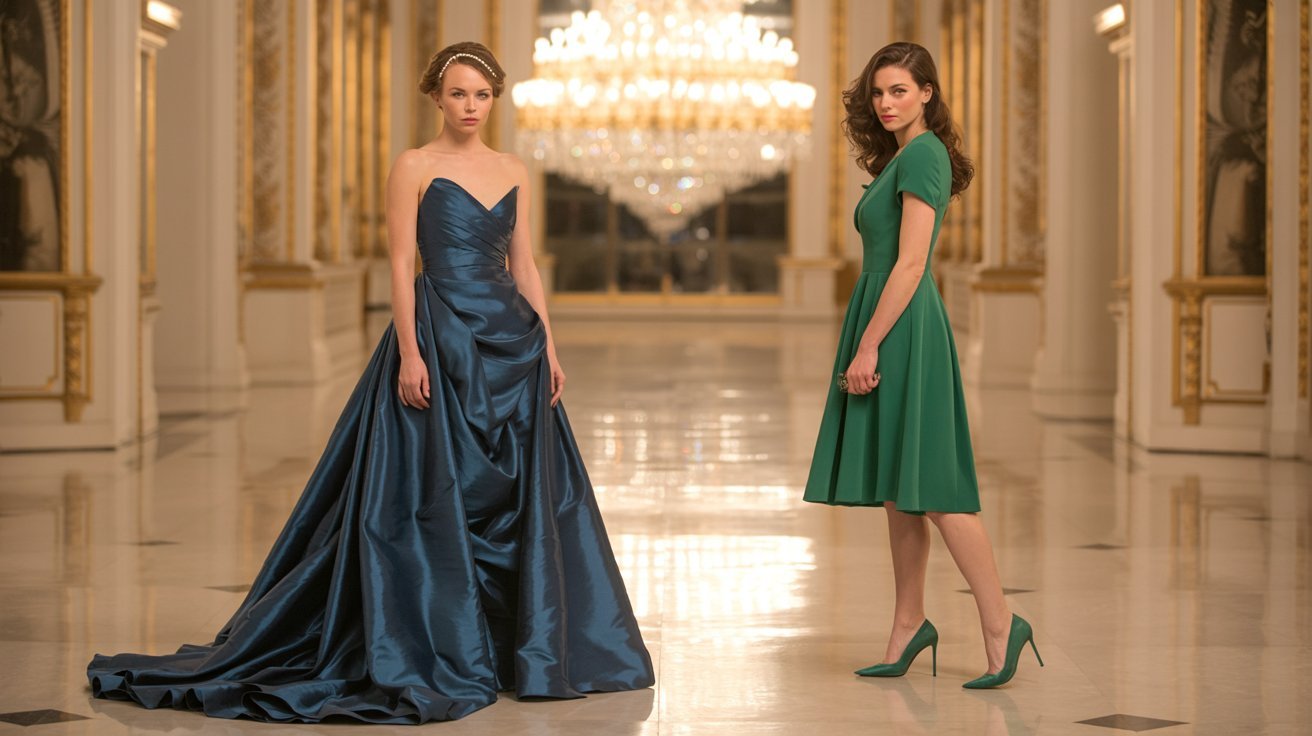
The main difference comes down to length, formality, and construction. Here is a simple breakdown.
Length Comparison
An evening gown is always floor-length. It skims the ankle or sweeps the floor, and that length is a big part of what makes it a gown. An evening dress has no such rule.
It can be mini, knee-length, midi, or full-length. This gives you a lot more flexibility when picking something for a specific event or setting.
Formality Level
A gown is made for black-tie and ultra-formal occasions. It signals a high dress code and is expected at events like galas, award shows, and grand ceremonies.
An evening dress covers a much wider range. You can wear one to a cocktail party, a wedding reception, a formal dinner, or even a semi-formal night out. It fits more situations without losing its polished feel.
Construction and Detail
Gowns are structured, dramatic, and built to make a statement. They often feature boned bodices, fitted corsetry, dramatic trains, and heavy embellishments that take serious skill to put together. Evening dresses are more versatile.
They use lighter construction, simpler finishes, and cleaner lines that make them easier to wear across different settings without feeling overdressed.
Quick Comparison Table
| Feature | Evening Gown | Evening Dress |
| Length | Floor-length | Mini to full |
| Formality | Highly formal | Semi-formal to formal |
| Structure | Structured, detailed | Fitted or relaxed |
| Occasions | Galas, red carpet | Parties, weddings |
When Should You Wear an Evening Gown?
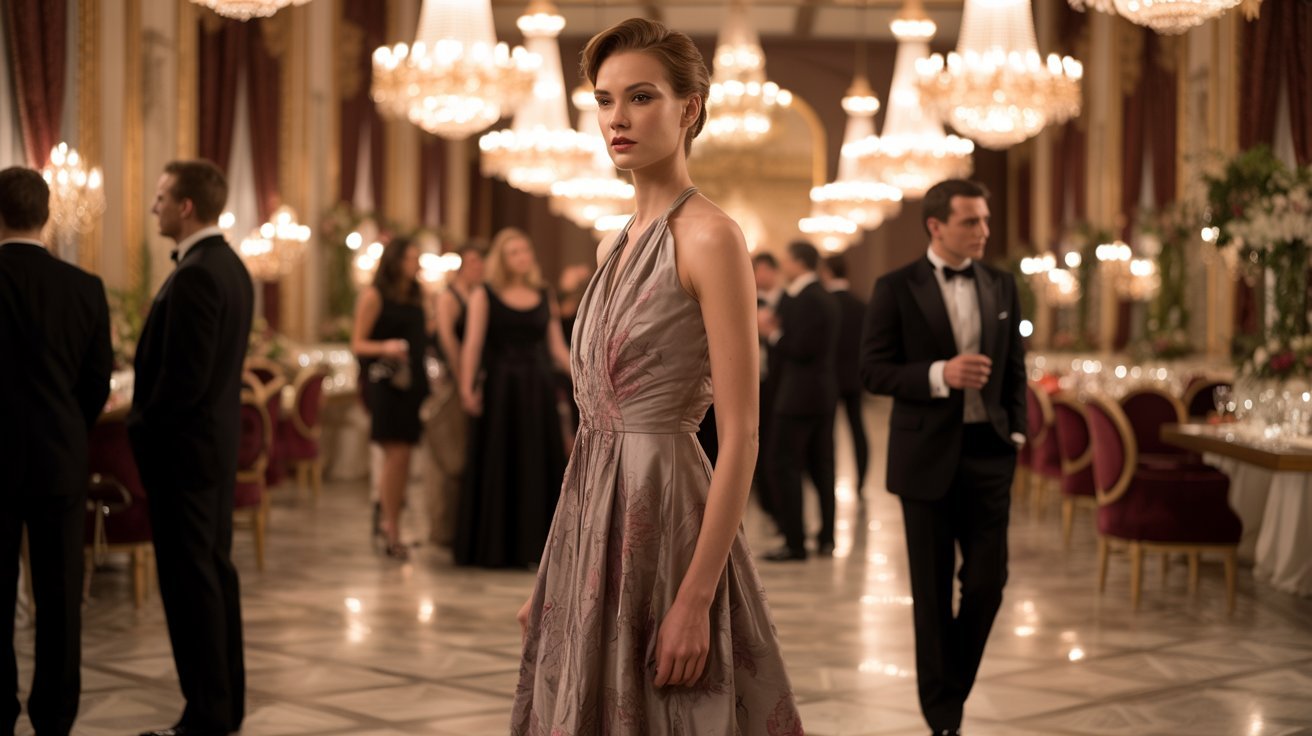
An evening gown is not an everyday choice. It belongs at events where the dress code is strict and the setting is grand.
Best Occasions for Evening Gowns
An evening gown works best at black-tie events, award ceremonies, and formal weddings where the venue calls for something floor-length and refined. Gala dinners that bring together a dressed-up crowd in a high-end setting are also a perfect fit.
Dress Code Clues to Look For
The invitation usually tells you everything. If it says “black-tie required” or “formal attire,” a gown is the right choice.
Red carpet events and charity balls almost always call for a full-length gown that matches the scale of the occasion. When in doubt, check the venue. A ballroom or luxury hotel setting is a clear sign that a gown will never feel out of place.
When Is an Evening Dress More Appropriate?
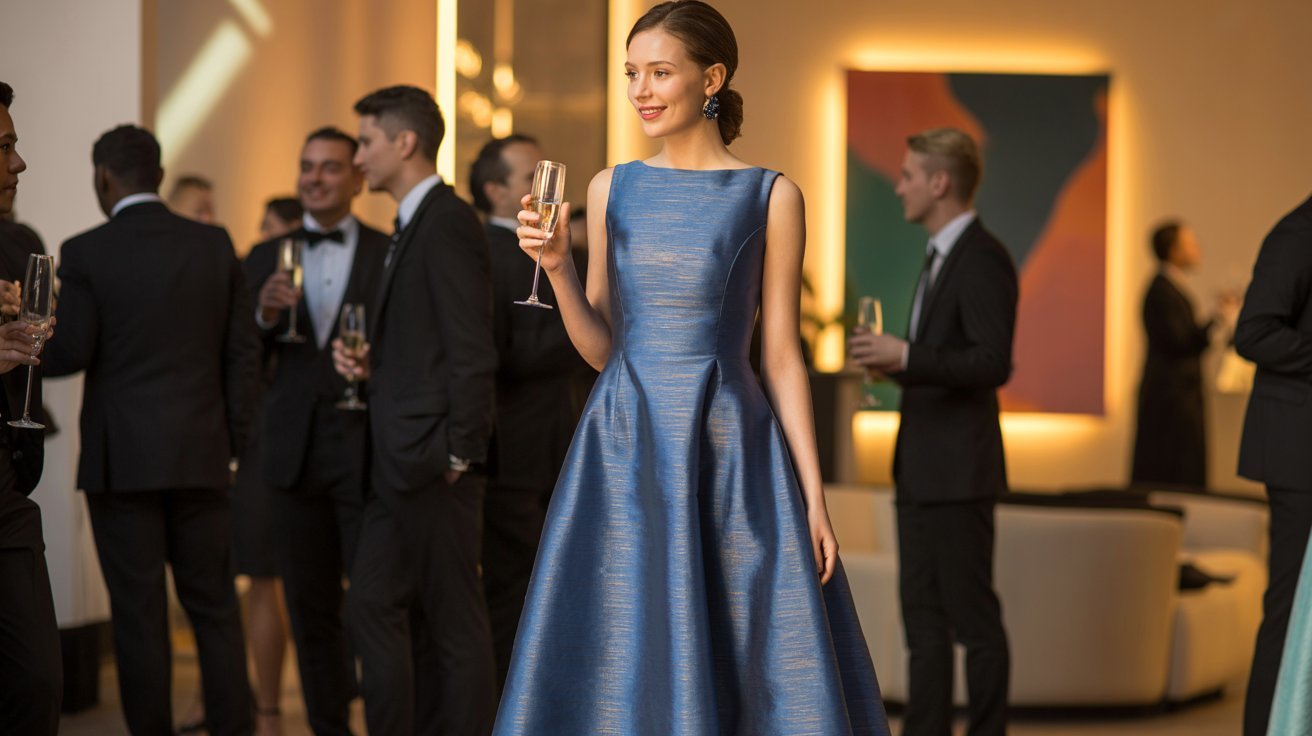
An evening dress is the better choice when the event is festive but not strictly formal.
Cocktail parties, evening receptions, holiday celebrations, and semi-formal weddings all call for something polished without going full black-tie.
When picking the right length, think about the venue, the dress code, and how much you need to move around.
A knee-length or midi dress often hits the right balance between looking put-together and feeling comfortable throughout the night.
Common Misconceptions About Evening Gowns
- Not every long dress is an evening gown. A maxi dress or casual floor-length style does not meet the formality level that a true gown requires.
- An evening dress is not a casual outfit. It can be just as formal as a gown depending on the fabric, cut, and occasion it is worn to.
- In the U.S., “evening gown” is commonly used to describe any formal floor-length dress worn to high-end events like galas or black-tie dinners.
- In the U.K., “evening dress” is often used as the standard term for formal occasion wear, covering what Americans would typically call a gown.
- The difference between the two terms is sometimes more about regional habit than actual style. Knowing the dress code matters more than the label on the tag.
Conclusion
An evening gown is always floor-length and built for high-formality events. An evening dress is the broader category that includes gowns and so much more.
Knowing the difference helps you shop smarter, dress right for the occasion, and describe what you own with accuracy.
Next time you search for formal evening gowns or list a dress online, use the correct term. It makes a real difference.
Browse our collection and find the perfect fit for your next event.
Frequently Asked Questions
Is an evening gown the same as an evening dress?
Not exactly. An evening gown is always floor-length and highly formal, while an evening dress is a broader category that includes shorter and semi-formal styles too.
What makes a dress count as an evening gown?
A dress becomes an evening gown when it is floor-length, made from luxurious fabric, and built for high-formality occasions like black-tie events or gala dinners.
Can I wear an evening dress to a black-tie event?
It depends on the length and style. A full-length evening dress in a formal fabric can work, but a short or casual evening dress would not meet black-tie standards.
What is the difference between a formal evening gown and a cocktail dress?
A formal evening gown is floor-length and made for the most dressy occasions. A cocktail dress is shorter, usually knee-length, and suited for semi-formal or smart casual events.
How do I know which one to wear to an event?
Always check the dress code on the invitation first. “Black-tie” or “formal attire” calls for a gown, while “cocktail” or “smart casual” gives you room to wear a shorter evening dress.