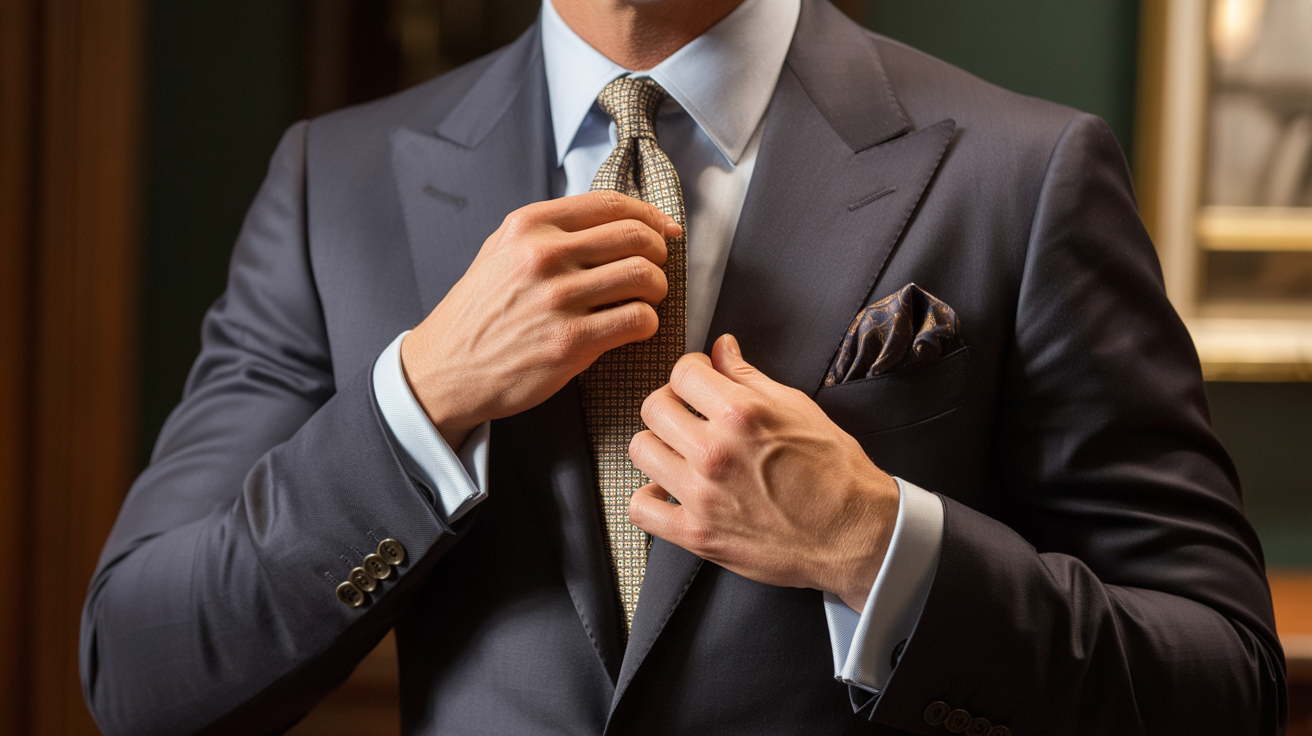
You’ve got your suit on, your tie picked out, and then you pause. What about the pocket square? These two accessories can make or break your entire outfit when worn together.
Many men struggle with matching these pieces. Should they match exactly? Should they contrast? The confusion keeps guys staring at their closets every morning.
Good news: this guide gives you clear, simple rules for creating great tie and pocket square combinations. No complicated color theory or fashion school required.
We’ll cover the basic matching rules you need to know, how to choose colors that work together, when to use patterns, and the most popular styles that never fail.
By the end, you’ll feel confident putting together these accessories for any occasion.
Basic Rules for Matching Ties and Pocket Squares
Getting tie and pocket square combinations right starts with understanding a few key principles.
The One Rule You Must Never Break
Never buy or wear matching tie and pocket square sets. This is the most important rule in men’s accessories. Those boxed sets you see at stores look dated and show a lack of personal style.
When your tie and pocket square match exactly, your outfit becomes boring. There’s no visual interest or depth to your look.
The whole point of wearing both accessories is to add layers and personality to your suit. Identical pieces work against this goal and make you look like you’re trying too hard without actually understanding style.
Three Color Approaches That Always Work
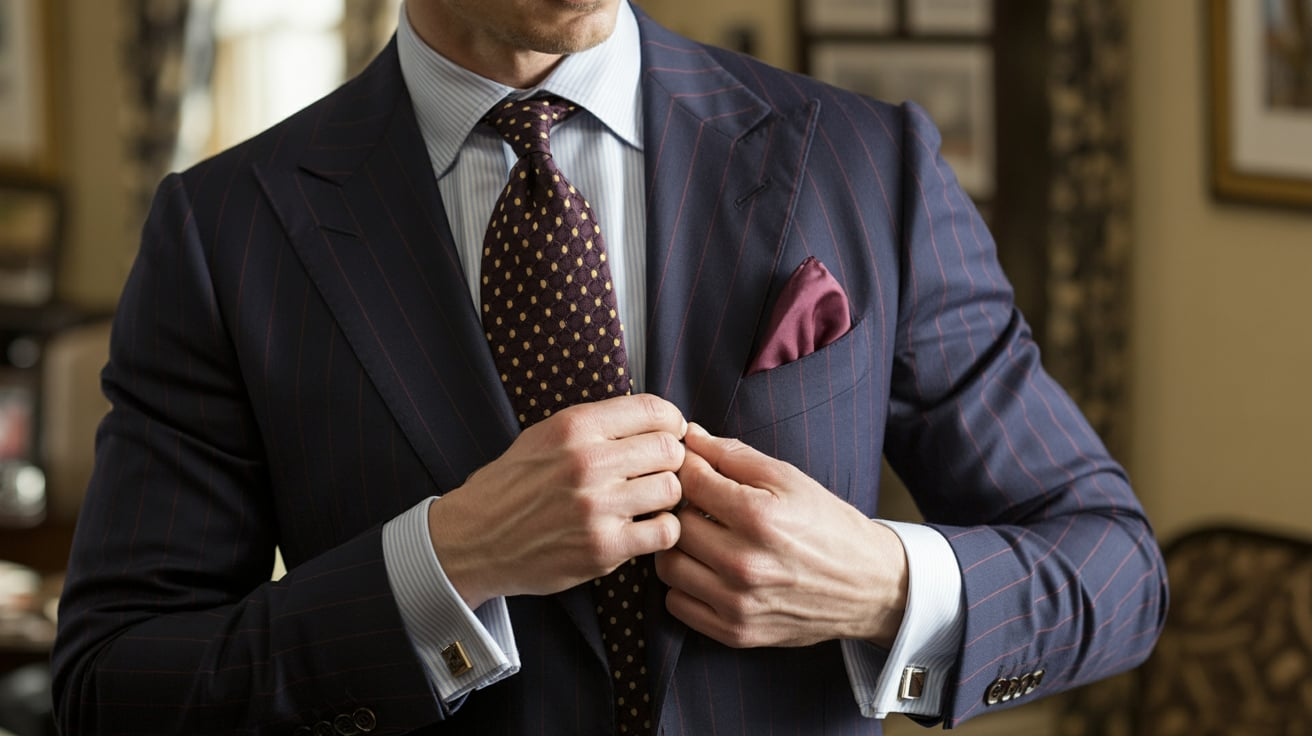
The similar colors method means both pieces share the same main color. For example, a navy tie with a navy pocket square that has white dots. This creates a coordinated look without being matchy-matchy.
The color connection method picks up an accent color from your tie. If your tie is burgundy with small blue stripes, use a blue pocket square. The contrasting colors method uses opposite colors for bold statements. Think orange and blue, or purple and yellow. This works best with plain suits, so the colors really stand out.
Pattern Guidelines Made Simple
Here’s good news: patterns rarely clash when it comes to tie and pocket square combinations. The pocket square stays mostly hidden in your jacket, so only a small part shows. This means you have the freedom to mix patterns without worry.
You can pair stripes with dots, checks with florals, or paisley with geometric shapes. The only rule is avoiding identical patterns in the same scale.
Different-sized patterns work fine together. Mix a thin striped tie with a large checkered pocket square, or pair a small polka dot tie with a bold floral square.
Choosing Colors for Your Combination

Color selection makes the biggest impact on how your accessories look together.
When to Complement Your Tie
Pulling colors directly from your tie’s pattern creates a smooth, put-together appearance. Look at the secondary or tertiary colors in your tie and match your pocket square to one of them.
This approach feels safe and always looks appropriate.
This method works great for traditional settings like business meetings, weddings, or formal dinners. It shows you care about details without being flashy.
The complementary approach builds a cohesive look from head to toe.
When to Use Contrast
Contrasting colors make you stand out and show personality. Choose colors from opposite sides of the color wheel for maximum impact.
A burgundy tie with a teal pocket square creates drama. A mustard tie with a purple square demands attention.
Your suit color becomes the canvas for these bold choices. Gray and navy suits work best as backdrops for contrasting tie and pocket square combinations.
Black suits can handle contrast too, but be careful not to look too costume-like.
Solid Colors vs. Patterns

Understanding when to use solids versus patterns helps you build a versatile wardrobe.
Benefits of Solid Color Combinations
Solid colored accessories offer the most flexibility in your wardrobe. They’re easier to match and less risky than patterns.
- Work with any suit color or pattern
- Switch between different outfits easily
- Create a clean, professional look
- Never go out of style
- Mix and match without worry
- Ideal for building your first combinations
Starting with solid ties and pocket squares lets you learn the basics without making mistakes. Once you feel comfortable, you can branch out into patterns.
Adding Visual Interest with Patterns
Mixing one solid piece with one patterned piece is the easiest way to add interest. A solid navy tie with a patterned pocket square works great.
So does a patterned tie with a solid pocket square that picks up one of the tie’s colors.
Using the same colors in different patterns creates depth while staying coordinated. A striped tie in blue and white pairs nicely with a blue and white checkered square.
You can also try inverse patterns where one piece has a light background with dark design, and the other reverses this.
Complementary designs like pairing geometric patterns with organic florals add refinement.
Contrast.
Fabric Considerations
The fabric you choose affects how formal your outfit looks overall.
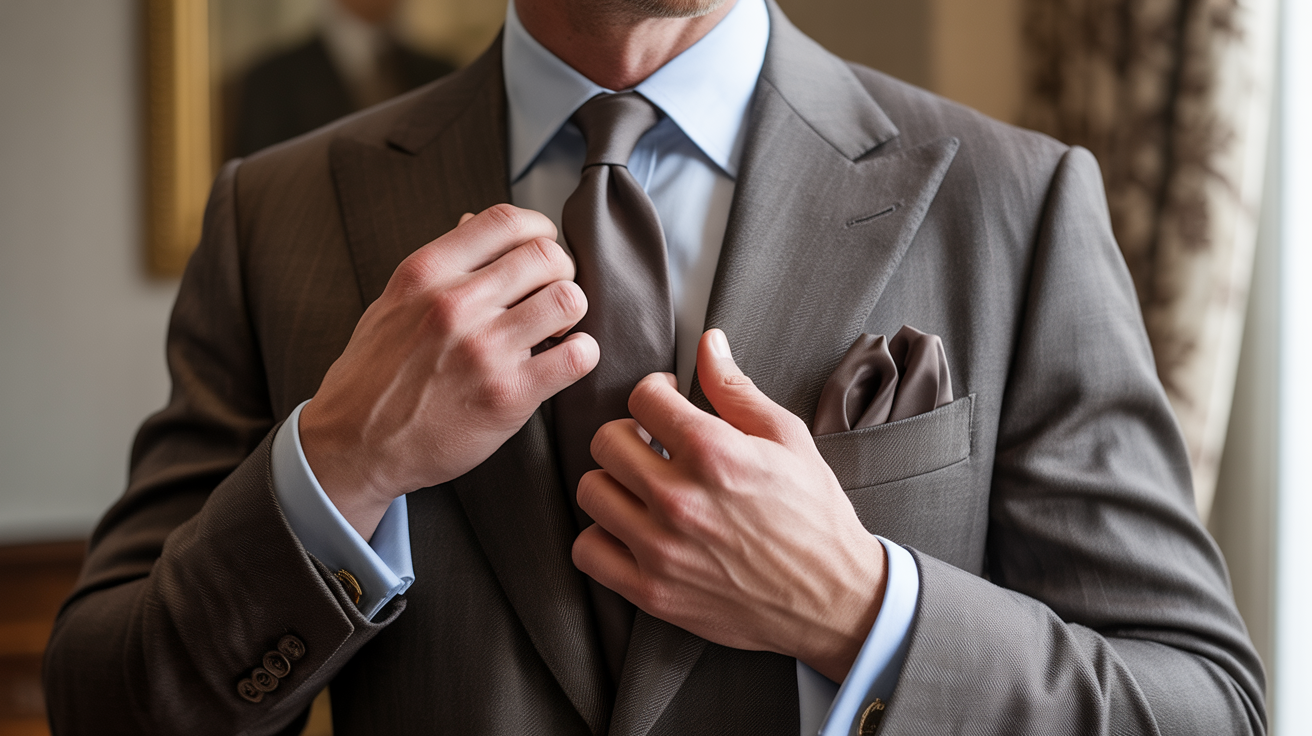
Match the formality level of your accessories to your suit. Silk ties and silk pocket squares work with wool business suits for traditional formal events. The smooth, shiny texture of silk improves your look.
Wool or textured accessories pair better with casual suits made from flannel or tweed. A knit tie with a wool pocket square complements the relaxed texture of these fabrics.
Mixing formality levels creates an odd disconnect that most people will notice.
White linen or cotton pocket squares are the exception to these rules. They work with almost any tie fabric and suit combination.
A crisp white linen square is always appropriate and adds a clean finishing touch. Avoid pairing glossy silk pocket squares with casual linen suits, as the shine clashes with the relaxed fabric.
Popular Combination Styles
Here are the most common and reliable tie and pocket square combinations you’ll see.
Classic Combinations That Work
- Matching solid colors in the same shade for a simple, coordinated look
- Mixed patterns in related colors for visual interest with harmony
- Solid pocket square with patterned tie, or the reverse, for easy styling
- The timeless white pocket square that pairs with any tie
- Complementary colors that share similar tones
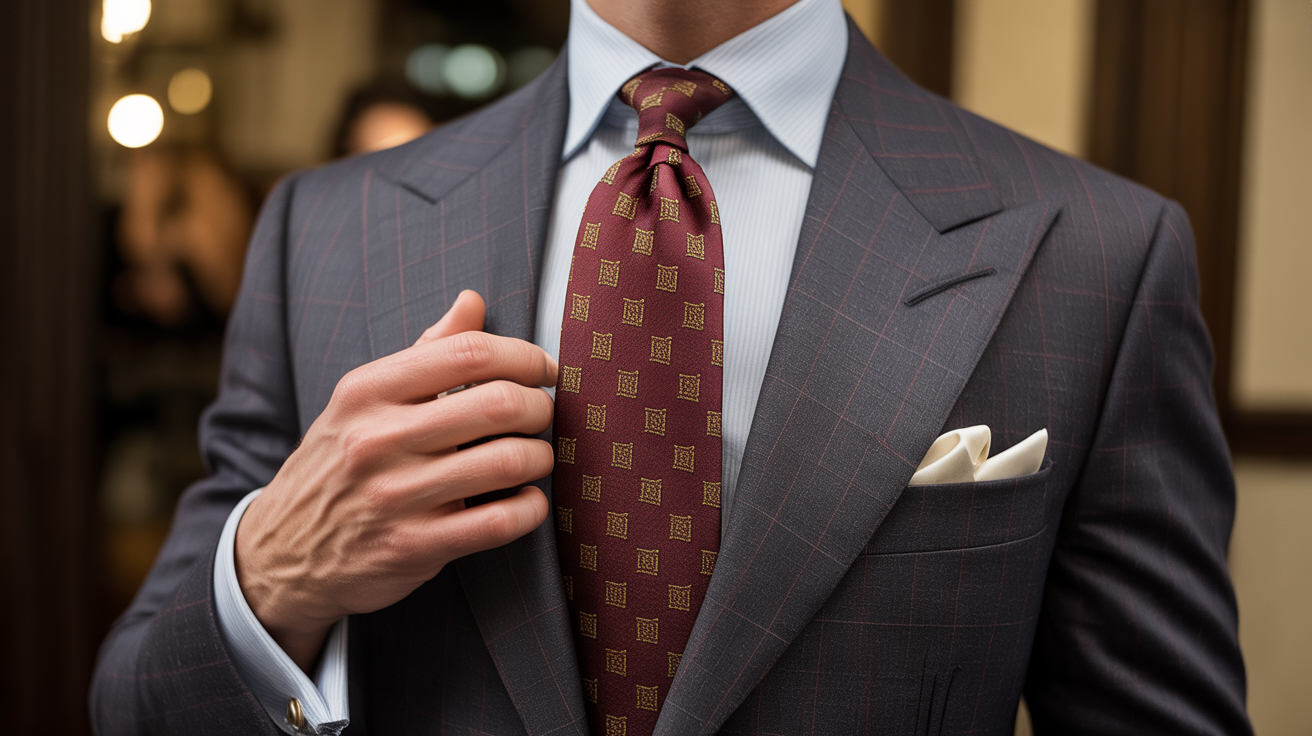
The white pocket square deserves special mention. This classic choice works for any occasion, from weddings to business meetings. It’s the safest option when you’re unsure what to choose.
For weddings, groomsmen often wear identical ties and pocket square combinations to look uniform. The groom then wears a different combination to stand out.
This creates visual hierarchy while keeping the wedding party coordinated.
Conclusion
Creating great tie and pocket square combinations comes down to personal preference within some basic guidelines. The rules aren’t strict, and you have room to express your style.
Start by following the three color approaches we covered. Try complementing your tie first, then experiment with contrast once you feel comfortable. Mix patterns freely but avoid identical sets.
The most important factor is confidence. When you feel good about your choices, that confidence shows. Other people respond to how you carry yourself more than the specific colors or patterns you wear.
Remember the one unbreakable rule: never wear matching sets. Beyond that, have fun trying different tie and pocket square combinations. Your accessories should reflect your personality and make you feel great.
Frequently Asked Questions
Can You Wear A Pocket Square Without Wearing A Tie?
Yes, pocket squares work great without ties for smart casual looks. This combination suits blazers with open-collar shirts. It’s appropriate for creative workplaces, weekend events, or dinner dates.
What’s The Best Pocket Square Color For A Black Suit?
White is the safest and most versatile choice for black suits. Silver, gray, or burgundy also works well. For more personality, try deep jewel tones like emerald, sapphire, or ruby that pop against black.
How Should A Pocket Square Be Folded For Different Occasions?
Formal events call for neat presidential or one-point folds. Business settings work well with simple, straight folds. Casual occasions allow puffy, loose folds with more personality. Match your fold style to the event’s dress code.
Is It Acceptable To Skip The Pocket Square Entirely?
Pocket squares are optional for most business situations and casual events. They’re expected at weddings, formal dinners, and black-tie events. When in doubt, wearing one shows extra effort and attention to detail.
Can Pocket Squares Work With Casual Outfits Like Blazers And Jeans?
Yes, pocket squares dress up casual blazer and jeans combinations nicely. Choose cotton or linen fabrics instead of silk. Use relaxed folds and fun patterns to keep the look from being too formal or stuffy.